
8 Pet Emergencies Families Should Be Prepared for This Summer
If your family is anything like most Richmond families, your pets are right in the middle of everything this summer. They are on the back porch during cookouts, at the park on Saturday mornings, splashing in the paddling pool with the kids, and tagging along on road trips. Summer is honestly one of the best seasons to be a pet parent.
But summer also brings a set of health risks for our four-legged family members that are easy to overlook when everyone is busy having fun.
The good news: most of the emergencies that land pets at the vet in June, July, and August are predictable. Knowing what they look like, and what to do when they happen, makes all the difference.
As a Richmond parent, you already know the importance of keeping your family healthy through every season. The same thinking applies to your pets.
Keeping pets healthy and happy is one of the most meaningful things you can do for your whole family’s wellbeing, and part of that is knowing the warning signs before you need them.
Here are the 8 summer pet emergencies every family should have on their radar this year.
1. Heatstroke
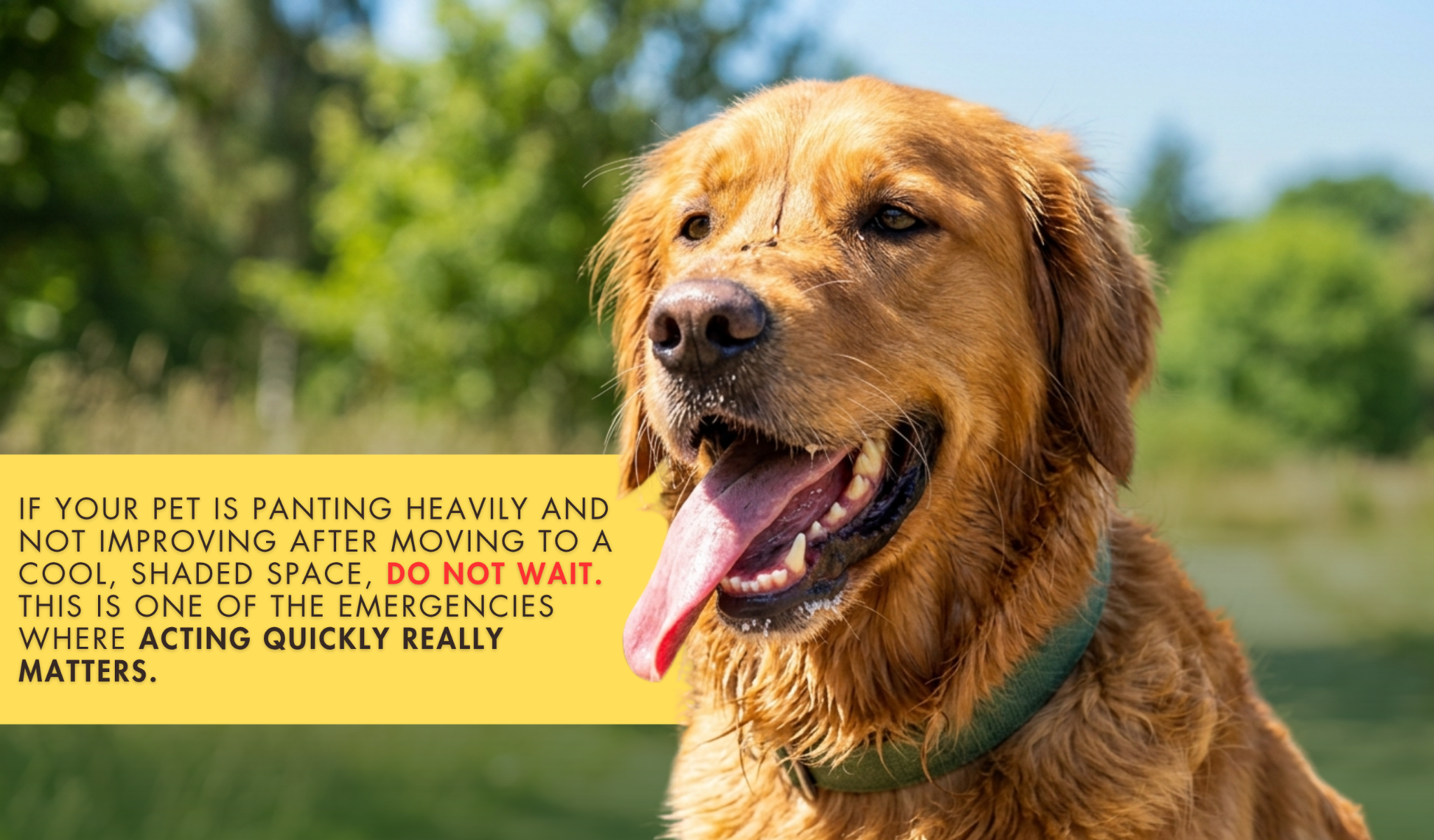
This is the big one for summer, and it sneaks up faster than most families expect. Heatstroke happens when a pet’s body temperature climbs above the safe threshold and their natural cooling system cannot keep up. Dogs cool down by panting; cats do the same but less efficiently. When those mechanisms are overwhelmed, things can turn serious within minutes.
Flat-faced breeds like French bulldogs, pugs, English bulldogs, and Boston terriers are at higher risk because their compressed airways make efficient panting harder.
But honestly, any dog in the right conditions can overheat, including mixed breeds and dogs who have always seemed to handle heat just fine.
A few things that Richmond families should know heading into summer: hot cars are one of the most dangerous environments for pets, even on days that do not feel extremely hot.
Michigan State University’s College of Veterinary Medicine notes that a car interior can reach 99°F on a 70°F day in just 20 minutes, and cracked windows make almost no meaningful difference.
Signs to Watch For
- Heavy, relentless panting that does not calm down after moving somewhere cool
- Excessive drooling, red or pale gums
- Wobbliness, confusion, or sudden stillness
- Vomiting, bloody diarrhea, or collapse
What to Do
- Get them out of the heat immediately and into air conditioning or deep shade
- Apply cool (not ice cold) water to the neck, groin, and armpits. A fan helps
- Offer small sips of water if they can swallow, but do not force it
- Head to the vet without delay. Heatstroke needs IV fluids and monitoring, not just home cooling
For Denver families, wellness checkup at Sploot Denver animal hospital is one proactive way to get your pet assessed before summer really heats up.
Their team offers same-day urgent care with extended hours (8 AM to 8 PM, 365 days a year) so you are not left waiting if something goes wrong mid-July.
2. Paw Pad Burns from Hot Pavements
This one catches a lot of families off guard, especially at the start of summer when everyone is excited to get outside and the pavement has not been tested yet.
Asphalt and concrete absorb heat and can run 40 to 60 degrees hotter than the surrounding air temperature, according to the AAHA. On a warm Richmond afternoon, that pavement could easily be hot enough to cause burns in under a minute of contact.
The tricky part is that dogs often keep going even when their paws hurt. You might not notice anything until you are home and your dog starts obsessively licking their feet, or they seem reluctant to walk the next morning.
Signs Something Is Wrong
- Limping, or lifting paws off the ground mid-walk
- Licking or chewing at the feet after being outside
- Redness, blistering, or raw-looking areas on the pad surface
- Whimpering when the paw is touched
What to Do
- Move off the hot surface immediately
- Rinse paws with cool (not cold) water for a few minutes. No ice
- Cover loosely to stop licking during the car ride to the vet
- Call your vet. Burned pads can get infected and often need proper treatment
- Going forward: walk early morning or after 7 PM in warm weather, and always do the hand-on-pavement test first
3. Ear Infections from Swimming
If your dog loves a splash in the James River, a dip at the lake, or even just a run through the sprinklers with the kids, they are more susceptible to ear infections during summer. Water that gets trapped in the ear canal creates exactly the warm, moist environment that bacteria and yeast love. Veterinarians call it otitis externa; most of us know it as swimmer’s ear, and dogs get it just like people do.
According to the Merck Veterinary Manual, dogs that swim frequently benefit from veterinarian-recommended drying agents applied after water exposure to keep the ear canal healthy.
Dogs with floppy ears (Labs, golden retrievers, spaniels, basset hounds) are at higher risk because their ear flaps trap more moisture than upright-eared breeds.
Signs Your Dog’s Ears Need a Vet Check
- Head shaking repeatedly, or scratching at one or both ears
- Unpleasant smell coming from the ear
- Redness, swelling, or discharge visible inside the ear
- Head tilting to one side, or flinching when the ear is touched
- If signs have been there more than a day, a same-day vet visit beats waiting it out
4. Cookout Food Hazards
Summer cookouts and backyard gatherings are genuinely one of the most common triggers for urgent pet care visits, and it makes complete sense. There is food everywhere, supervision naturally dips when you are hosting, and dogs are very good at finding whatever lands near the ground.
The ASPCA Animal Poison Control Center, which handled over 334,000 toxic exposure cases in 2025, consistently sees summer food hazards spike during cookout season. Here is what every family should know is on that list:
- Corn cobs: one of the most common causes of intestinal obstruction in dogs. They do not break down and can cause a blockage that requires surgery.
- Cooked bones and skewers: splintered cooked bones can cause internal lacerations. Rib bones, chicken wings, and kebab skewers are the main culprits at summer cookouts.
- Xylitol: the sugar substitute found in some sugar-free condiments, certain peanut butters, and diet baked goods. Even a small amount can cause a dangerous blood sugar drop in dogs.
- Grapes and raisins: associated with acute kidney failure in dogs. The safe dose is unknown, so no amount should be considered acceptable.
- Onions and garlic: toxic to both dogs and cats, including in cooked form. Marinades, sauces, and dips count.
- Alcohol: glasses left unattended on low tables or the lawn are a consistent summer risk. Even small amounts can cause serious harm to pets.
- Fatty grilled foods: a full plate of sausages or buttered corn can trigger pancreatitis, which is painful and a genuine vet visit.
If You Think Your Pet Ate Something Toxic: call your vet or the ASPCA Animal Poison Control Center at (888) 426-4435 immediately. Do not induce vomiting unless a vet tells you to. A consultation fee may apply to the hotline. Bring the packaging if you can.
5. Bee Stings and Allergic Reactions
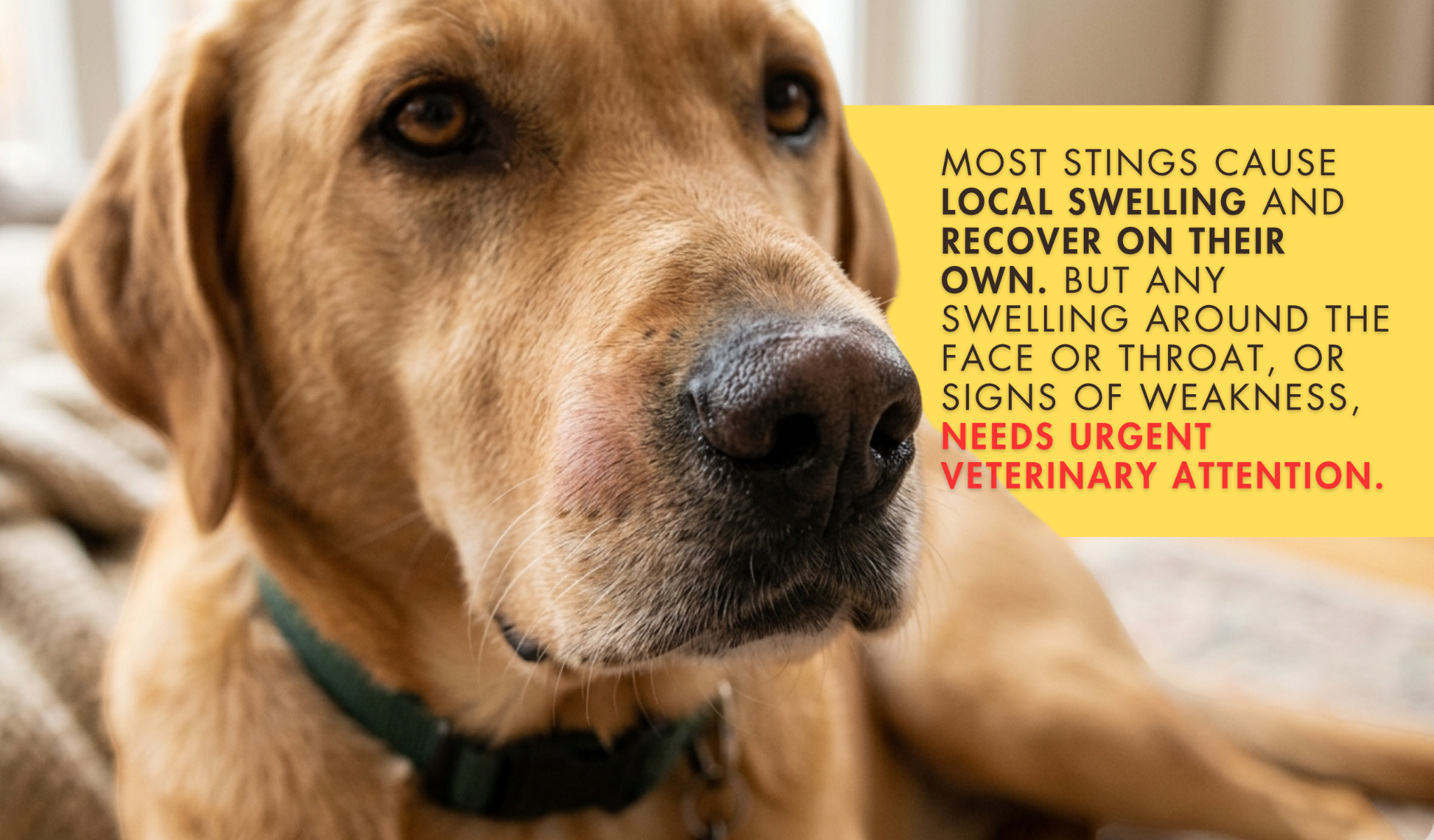
Summer means more time in the garden, at parks, and in outdoor spaces where bees, wasps, and yellow jackets are active. Dogs investigate the world with their noses and paws, which means stings tend to happen around the muzzle or feet. Most single stings produce local swelling and some discomfort that passes fairly quickly.
But some pets have allergic reactions, and a small number can experience anaphylaxis, which is fast-moving and requires emergency treatment. The MSD Veterinary Manual notes that insect stings increase significantly during summer months as pets spend more time outdoors.
A Mild Sting Reaction: Watch and Wait
- Local swelling at the sting site
- Pawing at the face or mouth
- Mild, brief vomiting that settles quickly
Go to The Vet Now
- Rapid or spreading swelling, especially around the face, throat, or eyes
- Hives or welts visible through the coat
- Vomiting with lethargy or weakness
- Difficulty breathing, pale gums, or collapse
- A sting inside the mouth or throat
Pets with no previous allergic history can still develop anaphylaxis. Do not wait it out if any of the above is present.
6. Fireworks Stress, Escapes, and The Injuries that Follow
If you have ever watched your dog tremble through a thunderstorm, you have a preview of what fireworks night looks like for a lot of pets. The ASPCA consistently identifies fireworks as one of the major seasonal stressors for companion animals, and the period around the Fourth of July produces a significant spike in lost pet reports.
Pets that escape during fireworks events can sustain injuries from traffic, falls, or encounters with other animals. And it happens fast: a door opens for a second, someone walks out to watch the show, and the dog is gone before anyone realizes.
Before the Fireworks Happen
- Check that your pet’s microchip registration is current and your contact details are up to date
- Make sure ID tags are readable and attached securely to the collar
- Walk the fenceline. Check for gaps and make sure gate latches are fully secure
- Keep pets inside during peak fireworks hours. Closing curtains and playing music or a TV at moderate volume can help buffer the sound
- Talk to your vet ahead of time if your pet has significant fireworks anxiety. There are options available, from behavioral support to situational medication, and they work much better when arranged before the night rather than during it
7. Water Safety and Near-Drowning
Most dogs love water, and summer in Richmond means plenty of opportunities to swim. But water exposure comes with risks that are easy to underestimate.
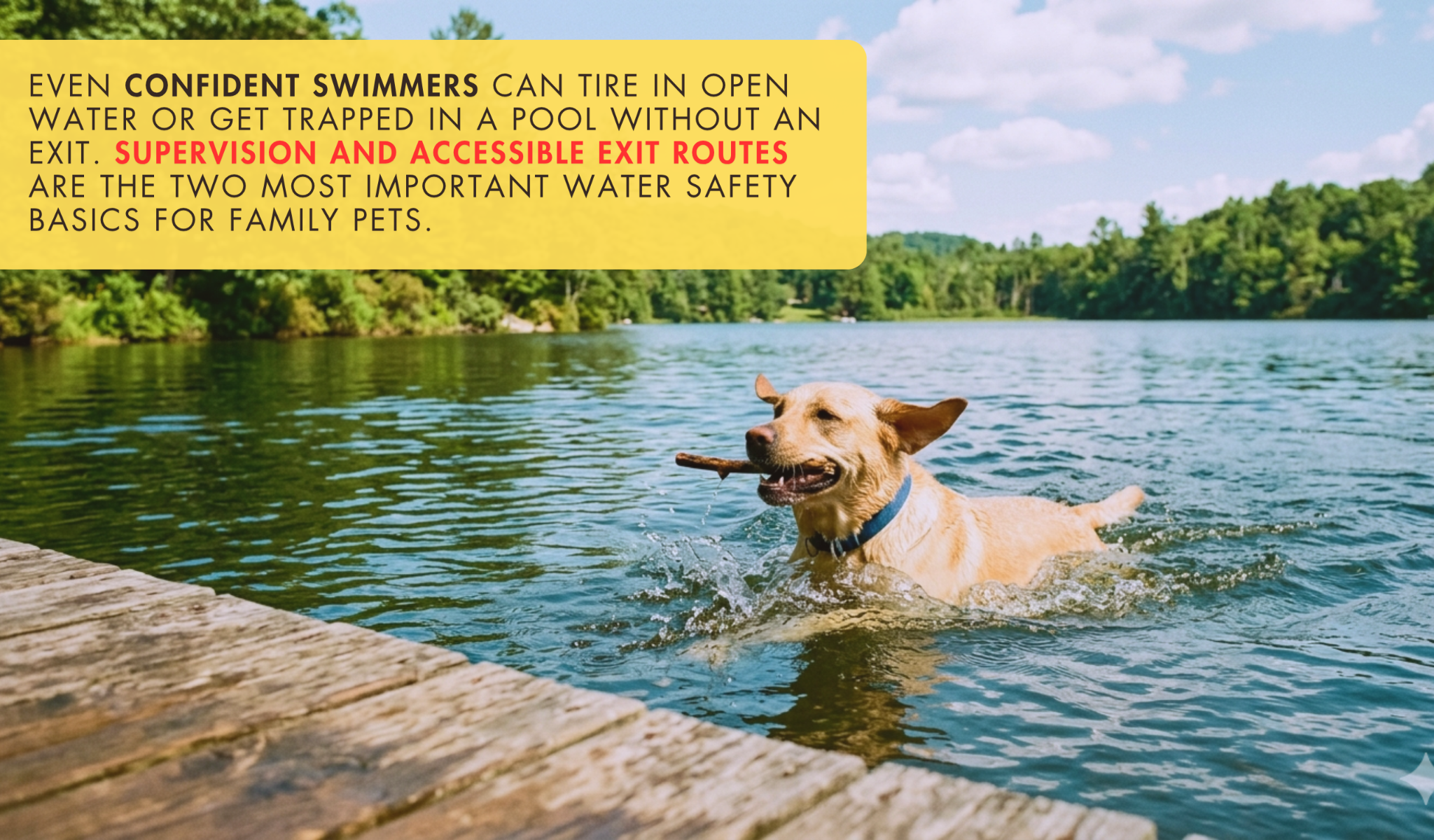
Not every dog who loves splashing is actually a strong swimmer, and even strong swimmers can get into trouble in open water with currents, or in pools with smooth walls and no accessible exit.
One thing many families do not know about: secondary drowning. This is when water that was inhaled during a swim incident causes delayed respiratory distress, sometimes hours after the pet seemed to have recovered fine.
A dog that had a scary moment in the pool and seemed okay can still develop breathing difficulty later that evening as fluid settles in the lungs. If your pet inhaled water during a swimming incident, veterinary evaluation is worth doing even if they seem completely normal afterward.
Water Safety Habits that Help
- Always supervise pets near pools, ponds, or open water
- Check that your pool has steps or a ramp that your pet can actually use to exit. Smooth pool walls with no way out can exhaust a dog quickly
- Rinse and dry your dog’s ears after every swim
- Consider a properly fitted canine life jacket for boating or open-water swimming
- If your dog inhaled water or was clearly struggling, call your vet even if they seem fine
8. Behavioral Emergencies and The Long-Term Cost of Skipping Early Support
This one does not come with the same urgency as heatstroke or a bee sting, but it belongs on this list because it affects more families than any of the other emergencies combined, and it tends to start small.
A puppy who is fearful, reactive, or develops separation anxiety during the busy summer months, when schedules shift and kids are home all day, can develop behavioral patterns that become genuinely difficult and expensive to address later.
Behavioral problems are one of the leading reasons pets are surrendered to shelters, and one of the most consistent drivers of long-term veterinary costs for families who keep their pets but wait too long to address problems.

Summer, with its changed routines, loud events, and increased outdoor exposure, is one of the most common triggers for anxiety and behavioral escalation in pets.
A wellness visit before or during the summer is a practical opportunity to raise behavioral concerns with your veterinarian, get a referral to a trainer or behaviorist if needed, and address anxiety support before it becomes a pattern.
A wellness checkup integrates behavioral health conversations into routine primary care, so families do not have to make a separate appointment to ask about what they are observing at home.
Their team is available same-day, seven days a week, with in-house diagnostics and a Fear Free approach across all locations.
One Final Thought
The through-line across all 8 of these summer emergencies is simple: most of them are predictable, most of them have early warning signs, and most of them go much better when families act on their instincts early rather than waiting to see how things develop.
The best prep you can do right now is not complicated.
Save your regular vet’s number. Identify your nearest same-day urgent care option. Know your after-hours backup. And if you have a new pet or a puppy who has not had their summer wellness visit yet, that is the single most useful first step.
Your pets are part of your family. A little preparation before summer gets busy is one of the most genuine acts of care you can give them.


