Well Child Visit Schedule: What to Expect at Every Age

Ever feel like you just left the pediatrician’s office only to get a reminder for another appointment? If you’re wondering why your child needs so many checkups?
The well-child check schedule exists for a crucial reason: your child changes more in their first few years than at any other time in life.
These regular visits aren’t just about vaccines or measuring height. They’re your opportunity to catch problems early, track development, and get expert guidance when you need it most.
Think of them as preventive maintenance for your most precious investment.
Understanding when and why these appointments matter can transform them from a chore into a valuable health partnership.
Let’s break down what you need to know.
What is a Well Child Checkup?
A well-child checkup is a routine appointment where your pediatrician evaluates your child’s overall health and development.
These visits aren’t for when your child is sick; they’re proactive health assessments designed to catch potential issues before they become problems.
During these checkups, your doctor monitors growth patterns, administers age-appropriate vaccinations, and screens for developmental delays.
You’ll also discuss nutrition, safety, and any concerns you might have. Think of it as a health report card that helps ensure your child is thriving physically, mentally, and emotionally.
These appointments create a baseline for your child’s health and give you peace of mind that everything is on track.
Well Child Check Schedule by Age
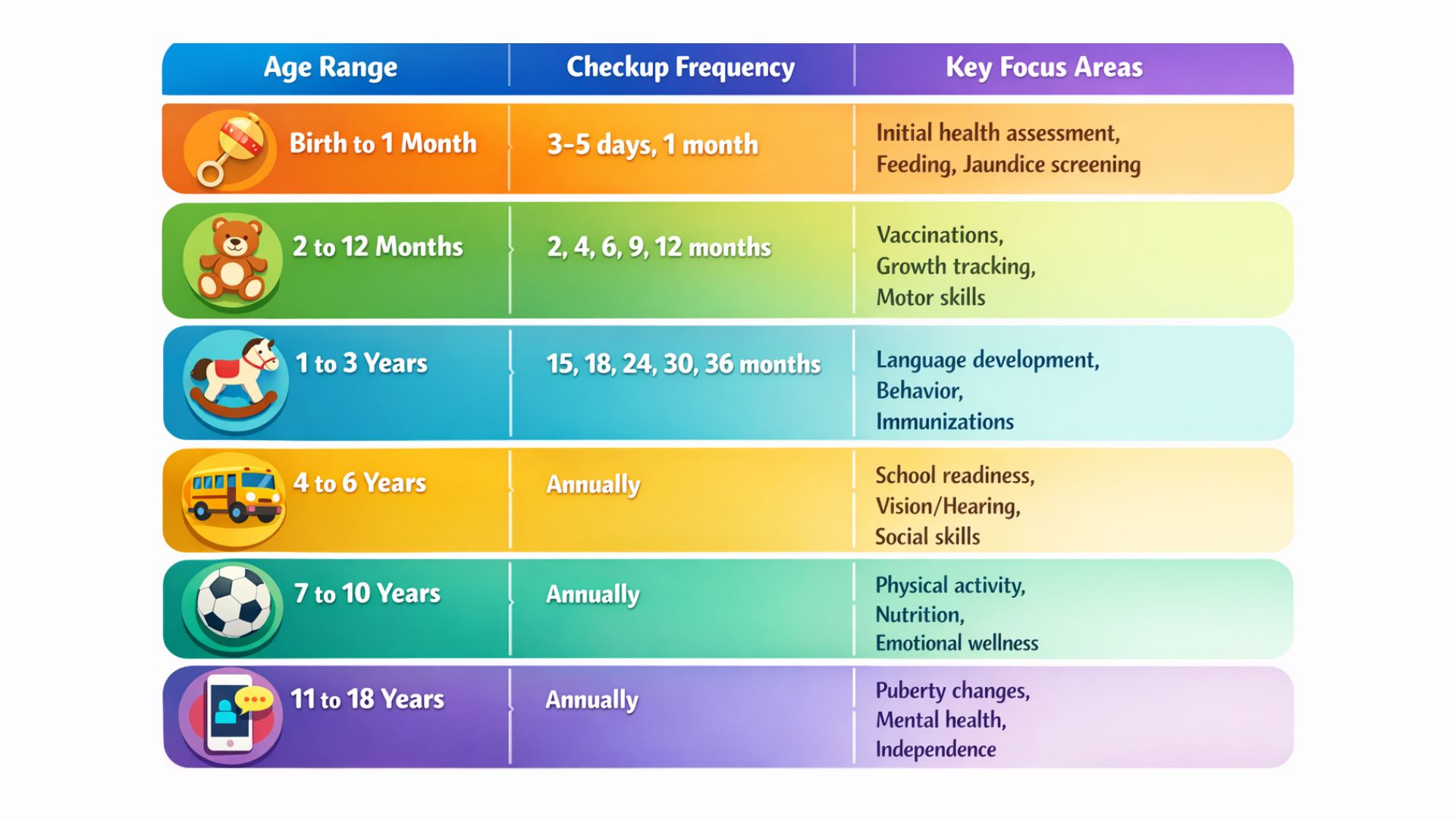
Keeping track of when your child needs checkups can feel overwhelming, especially during those busy early years. Here’s a breakdown of the recommended schedule and what happens at each stage:
| Age Range | Checkup Frequency | Key Focus Areas |
|---|---|---|
| Birth to 1 Month | 3-5 days, 1 month | Initial health assessment, feeding, jaundice screening |
| 2 to 12 Months | 2, 4, 6, 9, 12 months | Vaccinations, growth tracking, and motor skills |
| 1 to 3 Years | 15, 18, 24, 30, 36 months | Language development, behavior, and immunizations |
| 4 to 6 Years | Annually | School readiness, vision/hearing, social skills |
| 7 to 10 Years | Annually | Physical activity, nutrition, and emotional wellness |
| 11 to 18 Years | Annually | Puberty changes, mental health, and independence |
The first year is the busiest for appointments, but there’s a good reason for that. Your baby is growing and changing incredibly fast during those twelve months.
Birth to 1 Year
This is the most appointment-heavy period in your child’s life. Your baby will typically have checkups at 3-5 days old, then at 1, 2, 4, 6, 9, and 12 months.
-
Vaccinations: These visits focus on immunizations that protect against serious diseases like measles, polio, whooping cough, and hepatitis B. The vaccine schedule is carefully designed to protect your baby when they’re most vulnerable.
-
Growth monitoring: Your pediatrician will measure weight, length, and head circumference at every visit. These measurements are plotted on growth charts to track progress over time and ensure healthy development.
-
Developmental milestones: Doctors watch for age-appropriate skills like rolling over, sitting up, crawling, and babbling. These milestones help identify any delays early when intervention is most effective.
These frequent visits also help detect issues such as hip dysplasia, heart murmurs, or vision problems. You’ll discuss feeding options and when to introduce solid foods.
1 to 3 Years
Once your child hits the toddler years, visits should be spaced out to 15, 18, 24, 30, and 36 months. This phase focuses on language and motor development.
-
Continued vaccinations: Booster shots and additional vaccines maintain protection and add new immunizations, such as the MMR vaccine for measles, mumps, and rubella.
-
Speech assessment: Your doctor will evaluate how many words your toddler is saying and whether they’re putting sentences together. Language development varies, but tracking it helps identify concerns early.
-
Motor skills evaluation: Physical abilities like running, climbing stairs, using utensils, and drawing are assessed to ensure proper development.
Behavioral topics become more common during this stage. These checkups are the perfect time to get guidance on meltdowns, sleep issues, and other parenting challenges.
4 to 6 Years
The preschool years include annual checkups focused on preparing your child for school and social environments.
-
Vision and hearing screenings: These standard tests catch issues that could affect learning. Early detection means problems can be corrected before they impact academic performance.
-
School readiness: Your pediatrician will discuss social interactions, following directions, and managing emotions. These skills are crucial for kindergarten success.
-
Safety advice: Topics include bike helmets, swimming supervision, car seat transitions, and stranger danger. Your doctor will provide age-appropriate guidance.
Booster shots for vaccines are typically given during this period. Many parents find these visits helpful for discussing picky eating or screen time concerns.
7 to 10 Years
Elementary school kids still need yearly checkups even though they seem self-sufficient. These visits take a broader view of overall well-being.
-
Emotional health: Your doctor will ask about friendships, bullying, and school pressures. Mental wellness becomes increasingly important during these years.
-
Nutrition discussions: Conversations focus on balanced diets with fruits, vegetables, and protein. Nutritional needs increase as kids grow more active.
-
Physical activity evaluations: Your pediatrician will discuss exercise habits and participation in enjoyable activities. Establishing active patterns now creates lifelong habits.
Body changes might start toward the end of this period. Your doctor may discuss what to expect with puberty and reinforce good hygiene habits.
11 to 18 Years
The teen years bring unique health considerations. Annual checkups become more private and comprehensive.
-
Puberty monitoring: Your doctor tracks physical development and discusses the changes happening to your teen’s body, including growth spurts and hormonal changes.
-
Mental health screenings: Depression and anxiety become more common during adolescence. Your pediatrician will screen for these conditions and discuss coping strategies.
-
Preventive care: Topics like peer pressure, substance use, sexual health, and driving safety are addressed. Many doctors speak with teens privately to encourage openness.
Important vaccines such as HPV, meningitis, and annual flu shots are administered during these years. These checkups help teens develop healthy decision-making skills for adulthood.
Why is Following the Well Child Check Schedule Important?

Sticking to your child’s checkup schedule might seem like just another task, but these visits are valuable investments in their future health.
-
Catches problems early: Regular checkups identify developmental delays, vision issues, or growth problems when they’re easiest to address.
-
Prevents illness through vaccination: Staying on schedule with immunizations protects your child and helps protect other children in your community.
-
Tracks development over time: Pediatricians watch patterns and notice if your child’s growth curve suddenly changes or if milestones are consistently missed.
-
Creates a medical history: Complete records help doctors make better, faster decisions during emergencies. Your pediatrician knows your child’s baseline health.
-
Builds trust and comfort: Regular visits help your child become comfortable with their doctor, reducing anxiety during illness or injury.
How to Prepare for Your Child’s Well Checkup
A little preparation makes these appointments more productive. Come ready with questions and information so you don’t forget important topics.
-
Write down your concerns: Keep a running list of things you’ve noticed between visits. Document symptoms like frequent stomachaches or bedwetting.
-
Track developmental milestones: Note when your child reaches new milestones, such as walking, talking, or reading. Bring specific examples if you’re concerned about delays.
-
Bring previous records: If you’ve switched doctors or moved, bring your vaccination records and past medical history to ensure continuity of care.
-
Prepare your child: For older kids, explain what will happen during the visit. Honesty about shots builds trust better than surprises.
-
Ask about next steps: Before leaving, confirm when the next appointment should be scheduled and what warning signs to watch for.
-
Discuss parenting challenges: These checkups aren’t just about physical health. Ask about potty training, bedtime battles, or sibling rivalry if needed.
Conclusion
Following your child’s well checkup schedule is one of the simplest yet most powerful ways to protect their health.
These appointments give you a roadmap through childhood’s major milestones and provide expert guidance exactly when you need it.
Yes, scheduling can be a hassle, and waiting rooms aren’t anyone’s favorite place. But the peace of mind knowing your child is developing on track?
That’s priceless. Don’t wait until something feels wrong to see your pediatrician. Prevention beats treatment every single time.
If you’re overdue for a checkup or unsure when your child’s next visit should be, reach out to your pediatrician’s office today.
Your future self will thank you for staying on top of these appointments now.