How to Get Baby to Sleep in Bassinet: Parent’s Guide

Getting your baby to sleep in a bassinet can feel like an impossible task.
Countless parents struggle with this nightly challenge. Your little one might drift off peacefully in your arms, only to wake up the moment you lower them into the bassinet.
It’s exhausting and frustrating, leaving you wondering what you’re doing wrong.
Here’s the truth: you’re doing just fine. Babies need time to adjust to sleeping independently.
Establishing healthy sleep habits early benefits everyone. Your baby learns to self-soothe, and you get the rest you desperately need.
With the right strategies and a bit of patience, you can help your baby feel safe and comfortable in their bassinet.
Understanding the Challenges of Bassinet Sleeping
Why do babies resist the bassinet so fiercely? Understanding the reasons helps you address them more effectively.
First, there’s the comfort factor. Your arms are warm, soft, and familiar. A bassinet feels flat and unfamiliar by comparison.
Babies spend nine months in a snug, cozy womb. The wide-open space of a bassinet can feel overwhelming.
Key challenges include:
- The startle reflex: Newborns have an active Moro reflex that can wake them suddenly
- Temperature changes: Moving from warm arms to a cooler bassinet triggers alertness
- Separation anxiety: Even tiny babies sense when they’re apart from you
- Environmental adjustments: New sounds, lighting, and surroundings take getting used to
Babies are hardwired to seek closeness with their parents. It’s a survival instinct. Your baby isn’t being difficult; they’re simply doing what comes naturally.
Recognizing this helps you approach the transition with empathy and realistic expectations.
Key Strategies for Getting Your Baby to Sleep in a Bassinet
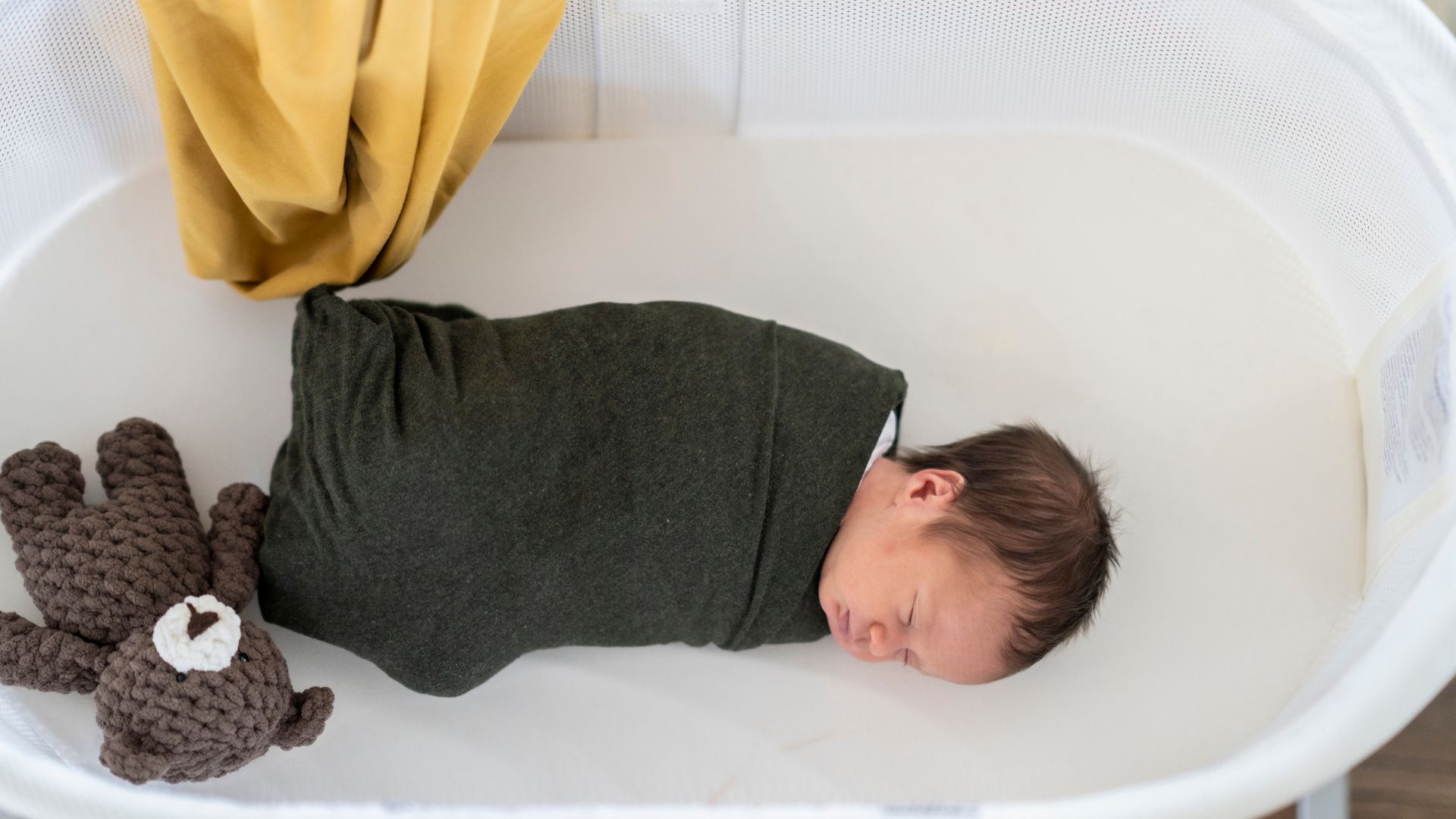
Let’s tackle practical solutions that actually work. These strategies help bridge the gap between your arms and independent bassinet sleep.
1. Establish a Consistent Sleep Routine
Predictability is your secret weapon. Create a calming bedtime ritual like a warm bath, gentle feeding, or quiet cuddles.
Keep lights dim and do the same activities in the same order every night. Your baby’s brain will associate these cues with sleep, making the routine itself a powerful sleep trigger.
2. Make the Bassinet Comfortable
Use breathable, soft sheets and ensure the bassinet is the appropriate size. Invest in a firm mattress designed for infant sleep.
This provides safety and support. Keep the bassinet close to your bed for easy nighttime access while maintaining a safe distance from your bedding.
3. Swaddle Your Baby
Swaddling recreates the cozy feeling of the womb. Wrap your baby snugly in a lightweight blanket or use a swaddle sack to restrict arm movement while allowing hip flexibility.
This reduces the startle reflex. Stop swaddling once your baby shows signs of rolling over and transition to a sleep sack instead.
|
How to Swaddle Your Baby: Step-by-Step Start: Lay the blanket flat in a diamond shape ↓ Step 1: Fold the top corner down about 6 inches ↓ Step 2: Place the baby on its back, with its shoulders below the fold ↓ Step 3: Wrap left side across body → Tuck under right side ↓ Step 4: Fold the bottom corner up over the feet (loose for hip movement) ↓ Step 5: Wrap right side across body → Tuck securely under left side ↓ Check: Arms snug, hips can move freely ↓ Done: Baby should feel secure but not too tight Safety reminder: Always place your swaddled baby on their back to sleep. Stop swaddling when they can roll over. |
4. Use Gentle Rocking or Vibrations
Motion soothes babies naturally. Consider a bassinet with built-in rocking or vibration features. Start with motion on, then gradually reduce it as your baby settles.
White noise machines also work wonders by providing consistent sound that masks household noise and creates a womb-like environment.
5. Gradually Transition from Holding to Bassinet
Hold your baby until they’re drowsy but not fully asleep. Lower them slowly into the bassinet, keeping your hands on them for reassurance.
Maintain gentle pressure on their chest and keep your face close. Gradually reduce contact over several minutes rather than pulling away immediately for a smoother transition.
Safety Tips for Bassinet Sleeping

Creating a safe sleep environment isn’t optional. It’s essential. Following evidence-based guidelines protects your baby and gives you peace of mind.
Always follow these safe sleep practices:
-
Back is best: Always place your baby on their back to sleep, never on their stomach or side. This significantly reduces SIDS risk.
-
Firm surface only: Use a firm, flat mattress with a fitted sheet. No pillows, blankets, bumpers, or stuffed animals belong in the bassinet.
-
Room temperature: Keep the nursery between 68°F and 72°F. Overheating increases SIDS risk. Dress your baby in one more layer than you’d wear.
-
Smoke-free environment: Never allow smoking around your baby or in spaces where they sleep. Secondhand smoke dramatically increases sleep-related risks.
-
Regular checks: Ensure the bassinet meets current safety standards. Check that all hardware is tight and there are no gaps where the baby could get stuck.
Your baby needs nothing but a firm mattress and a fitted sheet. Those cute blankets and pillows aren’t worth the risk. Save them for when your child is older.
Addressing Common Problems When Baby Sleeps in a Bassinet
Even with the best strategies, you’ll encounter challenges. Here’s how to troubleshoot common issues.
| Problem | Possible Causes | Solutions |
|---|---|---|
| Constant crying | Hunger, dirty diaper, discomfort, overstimulation | Feed if needed, check diaper, reduce stimulation, try white noise |
| Frequent waking | Startle reflex, hunger, temperature issues | Swaddle properly, feed on schedule, and adjust room temperature |
| Refuses the bassinet entirely | Prefers being held, bassinet discomfort | Gradual transition, place a warm hand on the chest |
| Only sleeps when held | Strong proximity need, habit formation | Start with drowsy-but-awake, and slowly reduce contact time |
| Wakes after 20-30 minutes | Sleep cycle transition difficulty | Use white noise, maintain a dark room, and gentle patting |
Most bassinet sleep struggles resolve with time and consistent strategies. However, certain signs warrant professional guidance.
Contact your pediatrician if your baby shows persistent difficulty breathing during sleep, frequently chokes or gasps, seems excessively sleepy or lethargic, or has difficulty settling, even when all basic needs are met.
A pediatric sleep consultant can help if you’ve tried everything consistently for several weeks with no improvement. They can identify specific issues and create a customized plan for your family.
Trust your instincts. You know your baby best. If something feels wrong, it’s always better to ask than to wait.
Conclusion
Getting your baby comfortable in a bassinet takes patience, consistency, and a bit of trial and error.
Remember the key strategies: establish a predictable routine, optimize the bassinet environment, use swaddling when appropriate, incorporate gentle motion, and transition gradually from your arms.
Safety always comes first. Back sleeping, firm surfaces, and a clear sleep space are non-negotiable. When challenges arise, troubleshoot systematically and give changes time to work.
Your baby will adjust to sleeping in a bassinet. Some take days, others take weeks. That’s completely normal. You’re not failing if progress feels slow.
Every baby is different, and what works for one might not work for another. Stay consistent with your approach, trust the process, and be gentle with yourself.
You’re doing an amazing job, and those peaceful bassinet nights are closer than you think.