Why Your Kitchen Feels Chaotic Even When Everything Is Clean
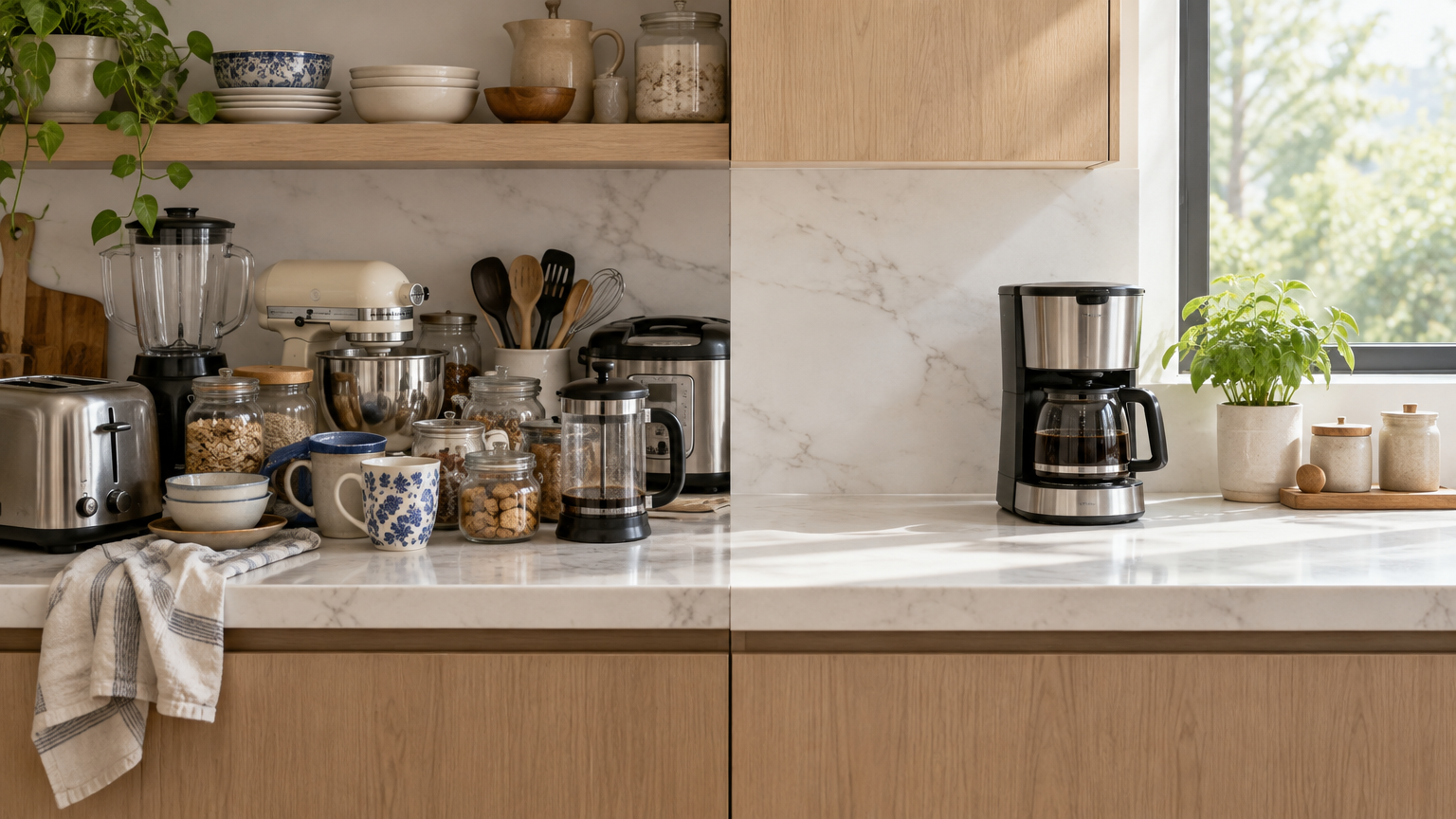
You’ve washed the dishes, wiped down the countertops, and swept the floor. Everything is technically clean, yet your kitchen still looks cluttered. The coffee maker competes for space with a toaster, decorative jars line the backsplash, and everyday utensils seem to occupy every available corner.
This familiar situation highlights an important distinction between cleanliness and visual organization. A kitchen can be perfectly hygienic while still appearing chaotic because too many objects compete for attention.
Visual clutter develops when surfaces, colors, and accessories create a fragmented appearance. Even useful items can contribute to this effect when they lack designated storage locations or interrupt the room’s natural layout.
The solution isn’t necessarily more cleaning or additional cabinets. Often, a few thoughtful adjustments to storage, furniture placement, and everyday routines can make a kitchen feel significantly more organized.
The Hidden Clutter That Has Nothing to Do with Dirty Dishes
Some of the most common sources of kitchen clutter have little to do with household cleanliness.
Excessive countertop accessories are a frequent problem. Knife blocks, utensil holders, spice racks, small appliances, and decorative containers may all serve practical purposes, but displaying everything simultaneously creates visual congestion.
Mismatched accessories can make the problem worse. Containers in different colors, competing metallic finishes, and unrelated decorative styles prevent the eye from finding a consistent visual rhythm.
Poor storage organization also contributes to disorder. When frequently used items are difficult to reach, they inevitably migrate onto countertops and remain there.
Bulky furniture presents another challenge. Oversized dining tables, substantial kitchen islands, or unnecessary storage units can restrict movement and make the room feel crowded.
Finally, poorly defined functional zones create confusion. When food preparation, dining, and storage activities overlap without clear boundaries, even a reasonably sized kitchen can become difficult to navigate.
Six Small Changes That Make Your Kitchen Easier to Live In
A practical kitchen refresh doesn’t require replacing cabinets or investing in expensive renovations. These six changes focus on making everyday activities easier while reducing unnecessary visual distractions.
1. Stop Treating Your Countertops Like Extra Storage
Countertops are primarily working surfaces, not permanent storage shelves.
When every appliance and accessory occupies valuable preparation space, cooking becomes less convenient and the kitchen appears constantly crowded.
Start by evaluating which objects genuinely need to remain visible. A coffee maker used several times daily may deserve a permanent location, while a food processor used occasionally can be stored inside a cabinet.
Keep frequently used essentials within reach, but avoid displaying everything simply because countertop space is available.
The resulting open surfaces will make food preparation easier and create a calmer visual impression.
2. Give Everyday Essentials a Permanent Home
An organized kitchen depends on predictable storage locations.
When utensils, cutting boards, spices, and food containers have designated places, household members spend less time searching for them and are more likely to put them away.
Drawer dividers, cabinet organizers, and labeled containers can simplify this process without requiring major investments.
Store everyday dishes near the dishwasher or drying area, cooking utensils close to the stove, and food preparation tools near the main workspace.
An effective organization system should follow natural kitchen routines rather than an arbitrary arrangement.
3. Make Better Use of Your Walls and Vertical Space
Vertical storage can increase usable space without adding bulky furniture.
Wall-mounted rails, magnetic knife holders, and compact shelves help relocate selected essentials away from crowded countertops.
The inside of cabinet doors can also accommodate slim organizers for measuring spoons, cleaning supplies, or lightweight accessories.
However, open storage should remain selective. Filling every wall with hanging utensils and decorative objects may simply transfer visual clutter from one surface to another.
Choose solutions that improve accessibility while maintaining a balanced appearance.
4. Free Up Surfaces Without Sacrificing Style
Reducing countertop clutter doesn’t mean removing every decorative element or compromising convenience.
Instead, consider replacing bulky tabletop accessories with compact, integrated alternatives. Store rarely used appliances, consolidate small containers, and choose organizers that fit comfortably inside existing cabinets.
Lighting offers another opportunity to preserve valuable surface space.
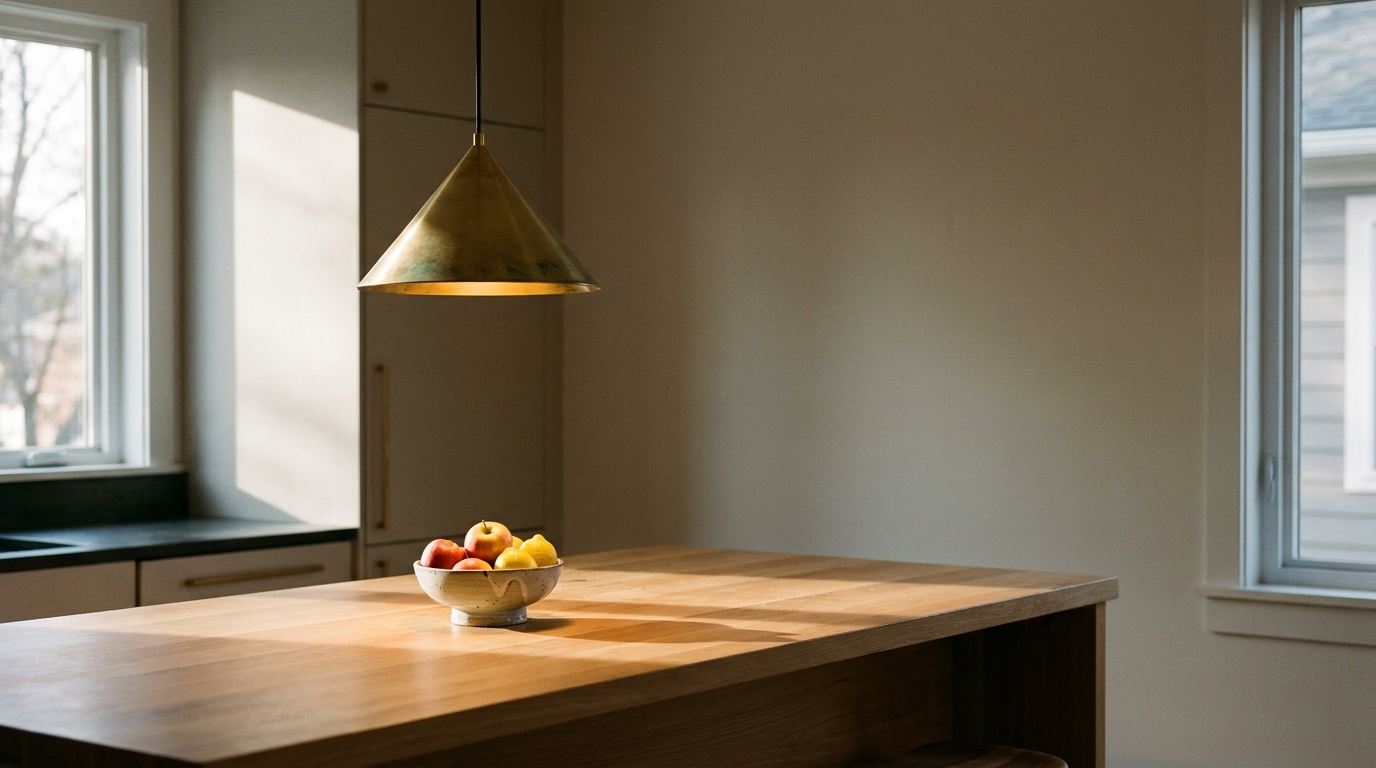
For example, pendant lights, including brass designs, can illuminate kitchen islands or dining areas without requiring tabletop lamps or additional standing fixtures.
Suspended lighting also creates a defined visual focal point while keeping working surfaces available for practical activities.
When choosing lighting, consider appropriate installation height, sufficient task illumination, and fixtures suitable for kitchen conditions.
The objective is to combine functionality with restrained decoration rather than sacrificing one for the other.
5. Create Clear Zones for Cooking, Eating, and Gathering
A well-organized kitchen benefits from clearly defined activity areas.
Food preparation should have accessible counter space, nearby utensils, and convenient access to ingredients. Cleaning supplies belong close to the sink, while dining accessories should remain near the eating area.
Even an open-plan kitchen can maintain distinct functional zones through furniture placement, lighting, and storage arrangements.
If the kitchen island doubles as a homework station or casual dining area, provide designated storage for items associated with those activities.
Clear zones reduce unnecessary movement and help prevent unrelated belongings from accumulating in working areas.
6. Replace Visual Noise with a Few Thoughtful Details
Too many decorative accessories can make an otherwise organized kitchen feel crowded.
Rather than displaying numerous unrelated objects, select a few pieces that complement the room’s overall design.
A ceramic fruit bowl, a small collection of coordinated containers, or a simple arrangement of greenery may provide enough personality without overwhelming the space.
Consider these practical adjustments:
- Limit decorative objects on working countertops.
- Choose storage containers with complementary colors and finishes.
- Group frequently used accessories on a single tray.
- Keep cabinet tops free from unnecessary collections.
- Replace multiple small decorations with one well-proportioned accent.
Visual consistency helps the kitchen feel intentional without making it appear impersonal.
Your Kitchen Should Work for Your Family, Not Against It
Kitchen organization should reflect the routines of the people who use it.
A household that prepares meals from scratch needs convenient access to cooking equipment, while a family with school-age children may benefit from an accessible snack station and designated lunch-packing area.
Frequently used objects should be easy to retrieve and return without unnecessary movement.
Consider the routes between the refrigerator, sink, stove, and preparation surfaces. Keeping these pathways clear improves efficiency and reduces frustration during busy periods.
Safety also matters. Sharp utensils, cleaning chemicals, and heavy cookware should be stored appropriately, particularly in households with young children.
At the same time, kitchens increasingly function as social spaces. Comfortable seating, accessible dining surfaces, and flexible gathering areas allow family members to spend time together without interfering with meal preparation.
The most successful layout supports multiple activities while maintaining clear organization.
A Kitchen That Stays Organized After the Weekend Is the Real Goal
A perfectly arranged kitchen may look impressive immediately after a thorough cleaning, but long-term organization requires systems that remain practical during ordinary weekdays.
Complicated storage arrangements often fail because they demand too much effort to maintain. Simple, accessible solutions are usually more sustainable.
A short daily reset can prevent clutter from accumulating. Returning utensils to their designated drawers, clearing preparation surfaces after meals, and checking for unnecessary items can preserve order without requiring extensive cleaning sessions.
Regularly reviewing kitchen belongings also helps. Duplicate tools, unused appliances, and excessive containers consume valuable storage space that could serve more practical purposes.
Organization should evolve as family routines change. Storage arrangements that worked several years ago may no longer suit current cooking habits, household schedules, or accessibility needs.
Ultimately, a comfortable kitchen isn’t defined by the number of cabinets, expensive countertops, or perfectly coordinated accessories. Its real value comes from how naturally the space supports everyday family life. When everything has a purpose and a practical place, maintaining order becomes a manageable habit rather than a constant struggle.