
30 Best Games to Play Outside with Kids of All Ages

When the living room turns into a battlefield of boredom, parents know it’s time to unleash the magic of group games.
There’s something special about watching children transform from restless energy bundles into laughing, cooperating teammates within minutes.
Group games aren’t just about keeping kids busy. They’re secret teachers wrapped in fun, helping little ones learn teamwork, communication, and problem-solving without even realizing they’re building life skills.
Whether it’s a rainy afternoon indoors or a sunny day at the park, having a collection of engaging activities can turn any gathering into an unforgettable adventure.
The best part? Most of these games require minimal equipment and maximum imagination.
From classic favorites to creative new twists that’ll have everyone giggling, there’s something here for every age and energy level.
Classic and Creative Outside Games That Bring Kids Together
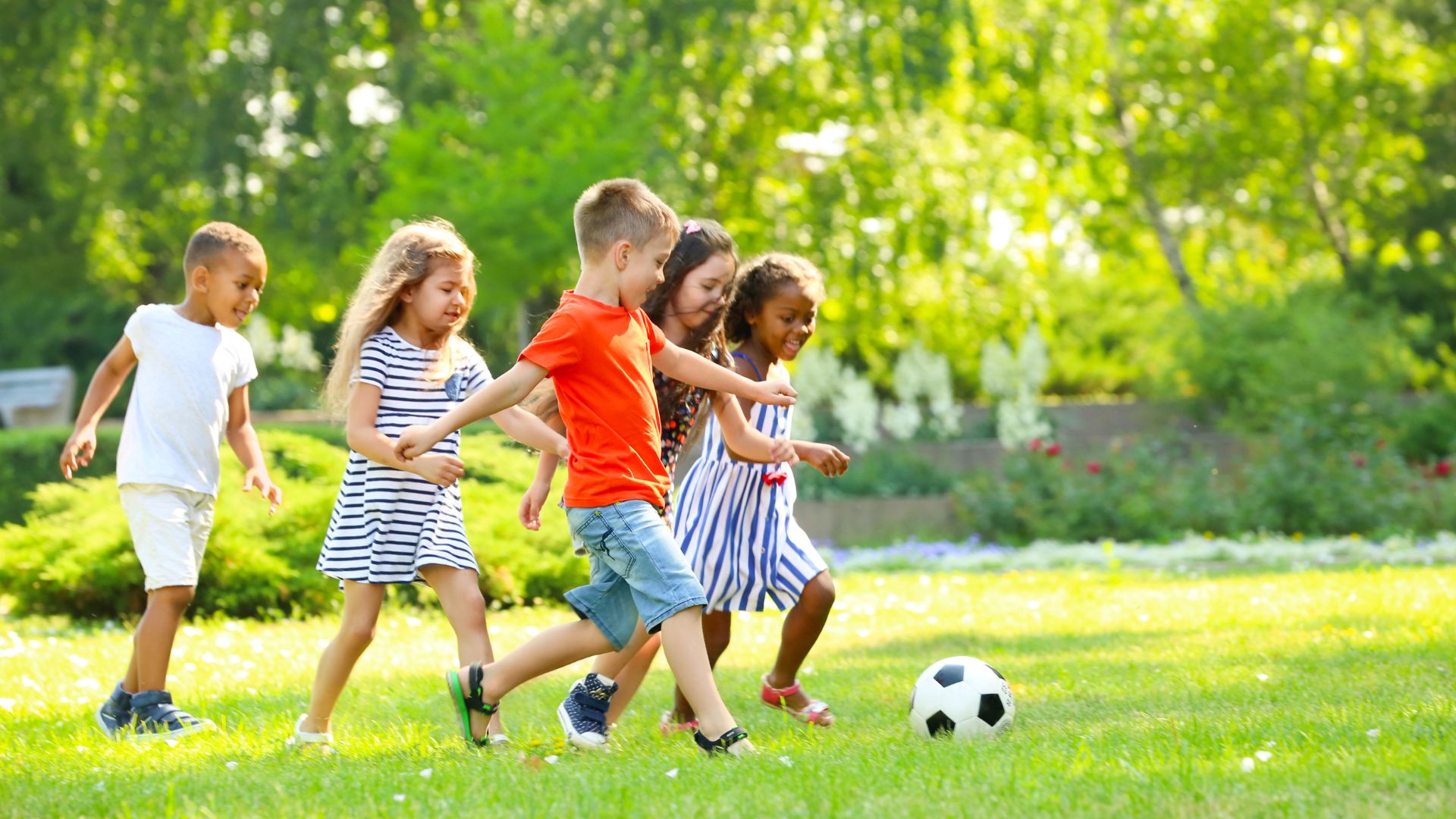
From timeless classics to exciting new favorites, these group games promise endless fun, laughter, and valuable lessons in teamwork for children of all ages.
1. Duck Duck Goose
Children sit in a circle while one player walks around, tapping heads and saying “duck” each time. When they say “goose,” the tapped player must chase them around the circle.
The tapper tries to reach the empty spot before getting tagged, creating exciting moments of anticipation and laughter.
Rules:
- The tapper must walk, not run, when saying “duck.”
- The “goose” must chase immediately after being tapped
- If caught, the tapper goes again; if not, the goose becomes the new tapper
- Players must remain seated until tapped
Number of Kids: 6-20 players
2. Red Light Green Light
One child plays the traffic light at one end, while the others line up on the opposite side. When “green light” is called, players move forward; “red light” means freeze instantly.
Anyone caught moving during a red light returns to the starting line, making this a test of self-control and speed.
Rules:
- The traffic light must face away during the “green light.”
- Players can move at any speed during green
- Frozen players cannot even wobble during red light
- First person to tag the traffic light wins
Number of Kids: 5-25 players
3. Freeze Dance
Music plays while children dance freely, expressing themselves however they want. When the music suddenly stops, everyone must freeze in place, like statues.
Anyone caught moving is out, though many variations keep eliminated players engaged by having them serve as judges for the remaining dancers.
Rules:
- All body parts must freeze when the music stops
- No talking or laughing once frozen
- Judges watch carefully for any movement
- The last dancer remaining wins the round
Number of Kids: 4-30 players
4. Simon Says
One player becomes Simon and gives commands that others must follow only when prefaced with “Simon says.” Commands without this phrase should be ignored.
Players who follow incorrect commands or miss correct ones are eliminated, teaching children to listen carefully and think before acting.
Rules:
- Only follow commands starting with “Simon says.”
- Simon can try to trick players with speed
- Eliminated players sit out untilthe next round
- Last remaining player becomes the new Simon
Number of Kids: 5-20 players
5. Musical Chairs
Chairs are arranged in a circle, one fewer than the number of players. Children walk around the chairs while music plays, then scramble to sit when it stops.
The player left standing is eliminated along with one chair, and the process continues until only one victorious child remains seated.
Rules:
- Keep moving while music plays, no hovering
- One person per chair only
- Eliminated players help remove chairs
- No pushing or shoving for seats
Number of Kids: 6-15 players
6. Capture the Flag
Two teams each protect a flag in their territory while trying to capture the opponent’s flag. Players can tag enemies in their territory, sending them to jail.
Jailed players can be freed by teammates, creating strategic gameplay that requires planning, speed, and teamwork to succeed.
Rules:
- Establish clear boundary lines before starting
- Tagged players go to the designated jail area
- Teammates can free prisoners by tagging them
- The first team to capture the opponent’s flag wins
Number of Kids: 10-30 players
7. Telephone
Players sit in a line or a circle, and the first person whispers a message to their neighbor. Each player whispers what they heard to the next person until reaching the end.
The final player announces the message aloud, usually hilariously different from the original phrase.
Rules:
- Whisper only once to each person
- No repeating or asking for clarification
- Keep messages reasonably complex
- The last player reveals the message to everyone
Number of Kids: 6-20 players
8. Sardines
This reverse hide-and-seek has one person hiding while everyone else searches. When seekers find the hider, they quietly squeeze into the hiding spot together.
The last person to find the group becomes the hider in the next round, creating funny moments as hiding spots get increasingly crowded.
Rules:
- Finder must hide with the original hider
- Stay quiet when joining the hiding spot
- Set boundaries for hiding areas
- Last seeker becomes next hider
Number of Kids: 5-15 players
9. What Time Is It, Mr. Wolf
Children line up at one end, while Mr. Wolf stands at the other, with their backs turned. Players ask, “What time is it, Mr. Wolf?” and move forward that many steps.
When Mr. Wolf yells, “Dinner time!” they chase players back to the starting line for a thrilling conclusion.
Rules:
- Mr. Wolf must face away when giving times
- Players take an exact number of steps called
- Tagged players become wolves, too
- Safe players who reach base win
Number of Kids: 6-20 players
10. Steal the Bacon
Two teams line up facing each other with a “bacon” object placed in the middle. Players are assigned numbers, and when their number is called, they run to grab the bacon and return to their line.
Successfully returning the bacon without being tagged scores points for the team.
Rules:
- Called players raced to the middle simultaneously. The players must return to the line without being tagged
- Dropped bacon must be picked up again
- First team to reach set points wins
Number of Kids: 8-24 players
11. Four Corners
Four corners of the room are numbered while one player closes their eyes in the center. Others choose corners to stand in before the center player calls a number.
Everyone in that corner is eliminated, and the process continues until only one survivor remains to become the new caller.
Rules:
- Move to the corners only when the center’s eyes are closed
- Called corner players are immediately out
- No switching corners once eyes open
- The winner becomes the new center caller
Number of Kids: 8-25 players
12. Hot Potato
Players sit in a circle passing an object quickly while music plays. When the music stops suddenly, whoever holds the “hot potato” is eliminated.
The game continues with the remaining players until only one champion remains, creating suspenseful moments as the object speeds up.
Rules:
- Keep the potato moving continuously
- No throwing, only passing to neighbors
- The holder at the stop is out immediately
- The last remaining player wins
Number of Kids: 6-20 players
13. Blob Tag
One player starts as “it” and chases others in the playing area. Each tagged player joins hands with the blob, growing the chain of taggers.
Only players at the ends of the blob can tag others, making the game increasingly difficult as the blob grows larger and more coordinated.
Rules:
- Blob members must stay connected
- Only end players can make tags
- Set clear boundary lines
- Last untagged player wins
Number of Kids: 8-30 players
14. Spud
One player throws a ball high while calling another’s name. That player must catch it while others scatter, then yell “Spud!” to freeze everyone.
They take three steps toward any player and throw the ball to hit them, earning points or letters spelling S-P-U-D based on whether they hit or miss.
Rules:
- All players scatter until “Spud” is called
- Frozen players cannot move their feet
- Thrower gets exactly three steps
- Complete S-P-U-D eliminates players
Number of Kids: 6-15 players
15. Parachute Games
Children hold the the edges of a large parachute and work together to create waves, mushrooms, or bouncing balls on top.
Various activities include taking turns running underneath the mushroom or making popcorn with soft balls. Cooperation is essential for success in these colorful activities.
Rules:
- Everyone must hold the assigned handle
- Follow the leader’s movement instructions
- Take turns for the activities below
- Work together to keep objects contained
Number of Kids: 8-30 players
16. Mother May I
One child plays Mother at one end while others line up opposite. Players take turns asking, “Mother, may I take [number] [type of steps]?”
Mother grants or denies permission. Players who advance without permission return to the start, teaching polite requesting and careful listening skills.
Rules:
- Always ask permission before moving
- Mother can say yes or no
- Players moving without permission go back
- First to reach Mother wins
Number of Kids: 5-15 players
17. Sharks and Minnows
One player becomes the shark in the middle while minnows line up on one side. Minnows must run to the opposite side without being tagged by the shark.
Tagged minnows become sharks too, increasing difficulty until the last minnow standing becomes the next game’s first shark.
Rules:
- Minnows must cross when the shark says go
- Tagged minnows immediately become sharks
- Establish clear safe zones on both sides
- Last minnow wins the round
Number of Kids: 8-25 players
18. Limbo
Players take turns passing under a horizontal bar without touching it or falling. The bar starts high and lowers after each round, challenging flexibility and balance.
Anyone who touches the bar or uses their hands for support is eliminated, leaving only the most flexible champion standing.
Rules:
- Lean backward, never forward
- No hands touching ground or bar
- Both feet must pass under together
- Lower bar after everyone attempts
Number of Kids: 5-20 players
19. Balloon Keep Up
Players work together as a team to keep one or multiple balloons from touching the ground. They can use their hands, heads, or any other body part to tap the balloons upward.
This cooperative game builds teamwork and can be made competitive by timing how long each group keeps its balloon.
Rules:
- Balloons cannot touch the floor
- All body parts are allowed for tapping
- Set time limits for challenges
- Count successful taps together
Number of Kids: 4-15 players
20. Tug of War
Two teams grip opposite ends of a strong rope and pull with all their strength. The goal is to pull the opposing team across a center line or marker.
This classic game teaches teamwork, coordination, and strategy as teams learn that synchronized pulling is more effective than individual effort.
Rules:
- Even teams for fair competition
- Establish a clear center line marker
- No wrapping rope around bodies
- First team pulled across loses
Number of Kids: 8-30 players
21. Zombie Tag
One player starts as the zombie and must walk with arms extended while making zombie sounds. Tagged players become zombies too, joining the growing horde.
Regular players can run, but zombies must walk, creating humorous chases as the zombie army slowly grows larger and more threatening.
Rules:
- Zombies must walk, not run
- Arms must stay extended forward
- Tagged players immediately become zombies
- Seta clear boundary area
Number of Kids: 8-30 players
22. Sleeping Lions
All players lie still on the ground pretending to be sleeping lions. One or two players act as hunters trying to make the lions move or laugh without touching them.
Lions who move or giggle become hunters themselves, continuing until only one perfectly still lion remains victorious.
Rules:
- Lions must stay completely still
- Hunters cannot touch lions
- Making sounds and faces is allowed
- The lions join the hunters immediately
Number of Kids: 6-20 players
23. Octopus Tag
The octopus stands in the middle of the play area while others line up on one side. Players must run to the opposite side without being tagged.
Tagged players become seaweed, frozen in place but able to tag passing players with their tentacles spread wide.
Rules:
- Seaweed cannot move its feet
- Seaweed can wave its arms to tag
- Runners must cross the entire space
- The last runner becomes the next octopus
Number of Kids: 8-25 players
24. Follow the Leader
One child becomes the leader and moves around the area performing various actions. Everyone else must copy exactly what the leader does, whether jumping, dancing, crawling, or making silly faces.
Players who fail to follow correctly can be eliminated or laughed at good-naturedly.
Rules:
- Copy the leader’s movements exactly
- The leader can change actions anytime
- No dangerous or inappropriate movements
- Take turns being the leader
Number of Kids: 5-25 players
25. Chain Tag
The first person tagged must hold hands with the tagger, forming a two-person chain. They chase others together, and each new tagged player extends the chain.
Only players at the chain ends can tag others, requiring coordination as the chain snakes around to catch the remaining runners.
Rules:
- The chain must remain connected at all times
- Only end players tag others
- Breaking the chain pauses tagging
- The last player caught wins
Number of Kids: 8-25 players
26. Treasure Hunt
Organizers hide objects or clues around the play area before children arrive. Players search individually or in teams following clues to find treasures.
This game encourages problem-solving, observation skills, and cooperation when played as teams working together toward a common goal.
Rules:
- Set clear boundary areas for searching
- Clues must be of an age-appropriate difficulty
- Teams share found treasures equally
- First to find all items wins
Number of Kids: 6-30 players
27. Human Knot
Players stand in a circle, reach across to grab the hands of two different people, creating a tangled human knot. Without releasing their hands, they must work together to untangle themselves back into a circle.
This requires communication, patience, and creative problem-solving as a cooperative team effort.
Rules:
- Cannot hold hands with people beside you
- Hands must stay connected throughout
- Stepping over or under arms allowed
- Work together, communicating clearly
Number of Kids: 8-16 players
28. Drip Drip Splash
This water-play variation of Duck, Duck, Goose has players sitting in a circle on hot days. The person who’s “it” carries a cup of water, dripping small amounts onto heads while saying “drip.”
When they say “splash,” they pour the remaining water and run while the splashed player chases them.
Rules:
- Keep small amounts for drips
- Save enough water for a splash
- The splashed player must tag the tapper
- Play outdoors or in prepared wet areas
Number of Kids: 6-20 players
29. Electricity
Players stand in a circle, holding hands, with eyes closed, except for one leader. The leader squeezes one neighbor’s hand to send “electricity” around the circle.
Each person passes the squeeze to their neighbor quickly, timing how quickly electricity travels around the entire circle back to the start.
Rules:
- Keep eyes closed during play
- Squeeze gently but noticeably
- Pass squeeze immediately when felt
- Time for a different route for the competition
Number of Kids: 8-25 players
30. Categories Running Game
Players scatter across the play area as the caller shouts categories such as “favorite color” or “number of siblings.” Players must quickly group with others who share their answer.
The caller can eliminate the most significant or the smallest group, or groups can earn points, creating opportunities for strategic thinking.
Rules:
- Groups form quickly after a category is called
- All players must join a group
- The caller determines the elimination method beforehand
- New categories each round keep interest
Number of Kids: 10-30 players
Wrapping Up
Group games create more than just entertainment. They build memories that children carry into adulthood, friendships strengthened through teamwork, and confidence gained from trying new activities.
The laughter echoing through playgrounds becomes part of childhood’s magic that parents cherish forever.
These games work beautifully at birthday parties, family reunions, school events, or casual weekend gatherings.
Parents and educators can mix and match based on available space, age groups, and energy levels.
The beauty lies in their simplicity and adaptability. Most require no expensive equipment or elaborate setup, just willing participants and a spirit of fun.
Ready to change the next gathering into an adventure?
Pick a game, gather the kids, and watch ordinary moments become extraordinary memories.


