
From Chaos to Calm: Practical Steps for Smoother School Mornings
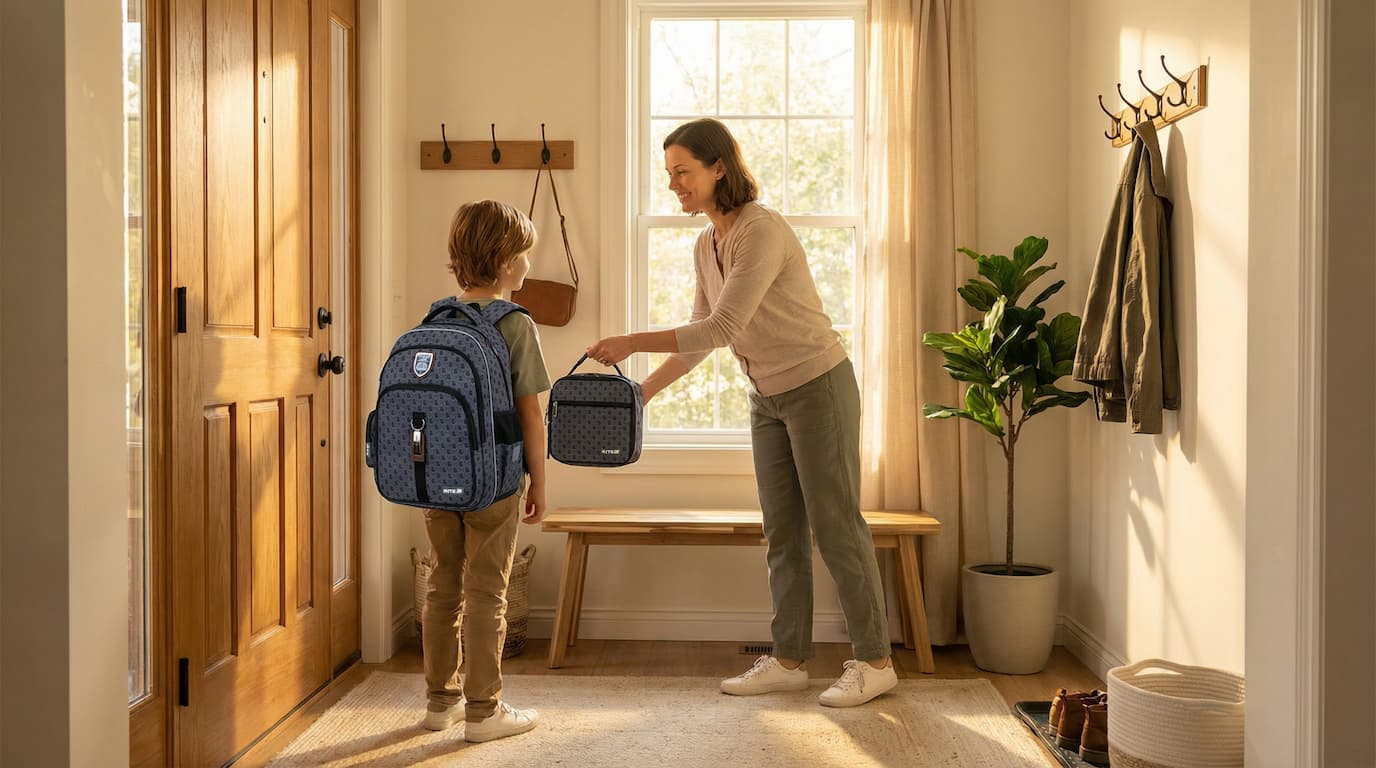
For many parents, the transition from summer flexibility to school-year structure can feel abrupt. Mornings that once unfolded slowly suddenly revolve around schedules, backpacks by the door, and getting out on time. For children ages 5-12, this daily shift is more than a logistical challenge it shapes how prepared, confident, and calm they feel as they start each school day.
School readiness isn’t just about arriving on time. It’s about helping children move through mornings with a sense of capability rather than pressure. The good news is that small, consistent changes in routines and environment can make mornings feel smoother for the whole family.
Why Predictable Mornings Matter
Children thrive on predictability. While adults may enjoy variety, a child’s developing nervous system finds comfort in knowing what comes next. Uncertainty in the morning what to wear, what to pack, where things are can lead to decision fatigue and emotional overload before the day has even begun.
Creating a simple, repeatable sequence helps reduce this strain. For younger children, this might look like a clear order such as get dressed → eat breakfast → brush teeth → head out. Older children can manage broader steps using a written or digital checklist. The goal is to replace repeated verbal reminders with visual cues that children can follow independently.
When routines stay consistent, tasks become automatic. This frees up mental energy for learning, social interaction, and emotional regulation at school.
The Night-Before Reset
Smooth mornings often begin the night before. Preparing ahead reduces the number of decisions that need to be made under time pressure.
Helpful night-before habits include:
-
Laying out a full outfit, including socks and weather-appropriate layers
-
Checking the next day’s schedule together (gym day, library books, special events)
-
Preparing water bottles and non-perishable lunch items
These steps don’t need to be perfect. Even a brief five-minute reset can remove common friction points that trigger morning stress.
Creating a Simple “Launch Pad”
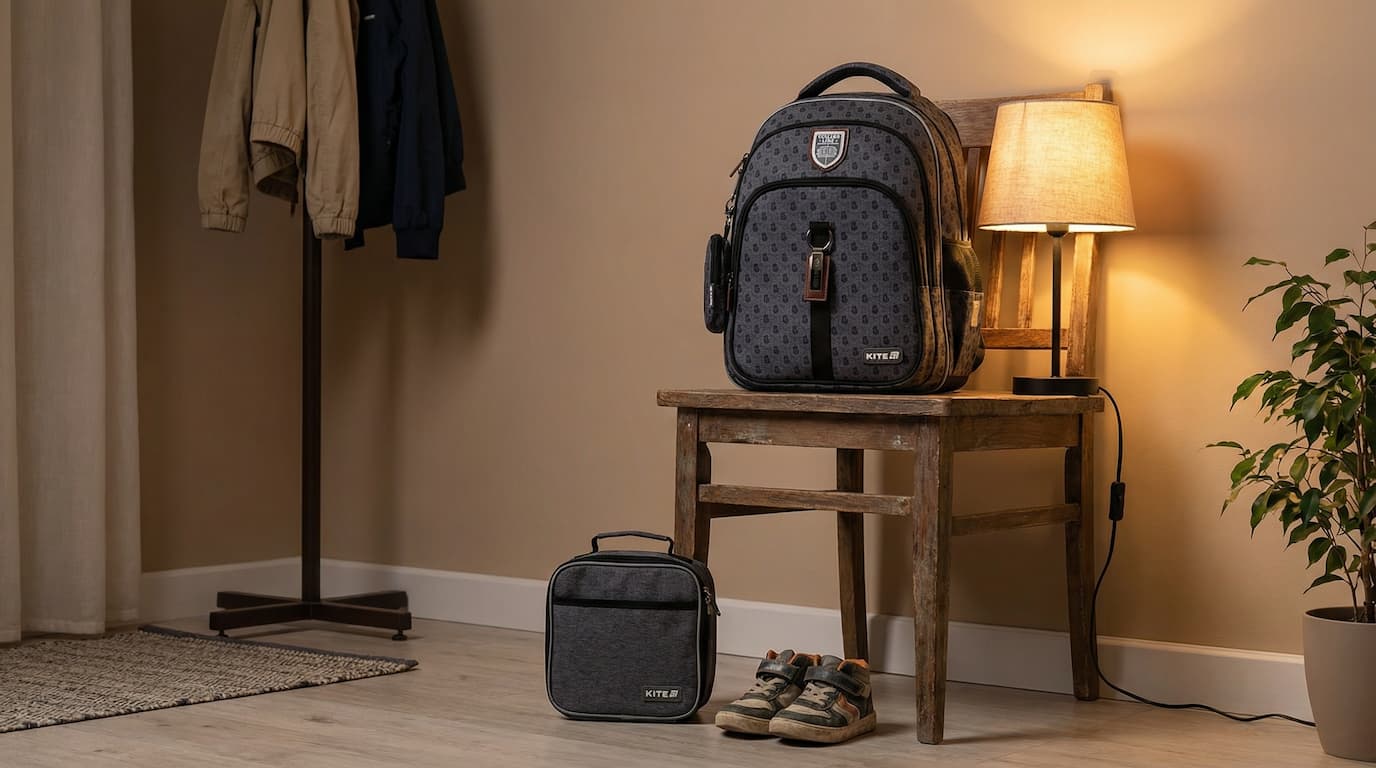
One of the most effective organizational tools is a designated space near the door where school essentials live. Shoes, coats, and bags all return to the same spot each day.
This “launch pad” reduces frantic searching and gives children a clear system they can manage themselves. Keeping this area free of unrelated clutter is key visual simplicity helps children stay focused during transitions.
Teaching Organization Without Overload
Organization doesn’t require elaborate systems. Children benefit most from simple, consistent structures they can understand and maintain.
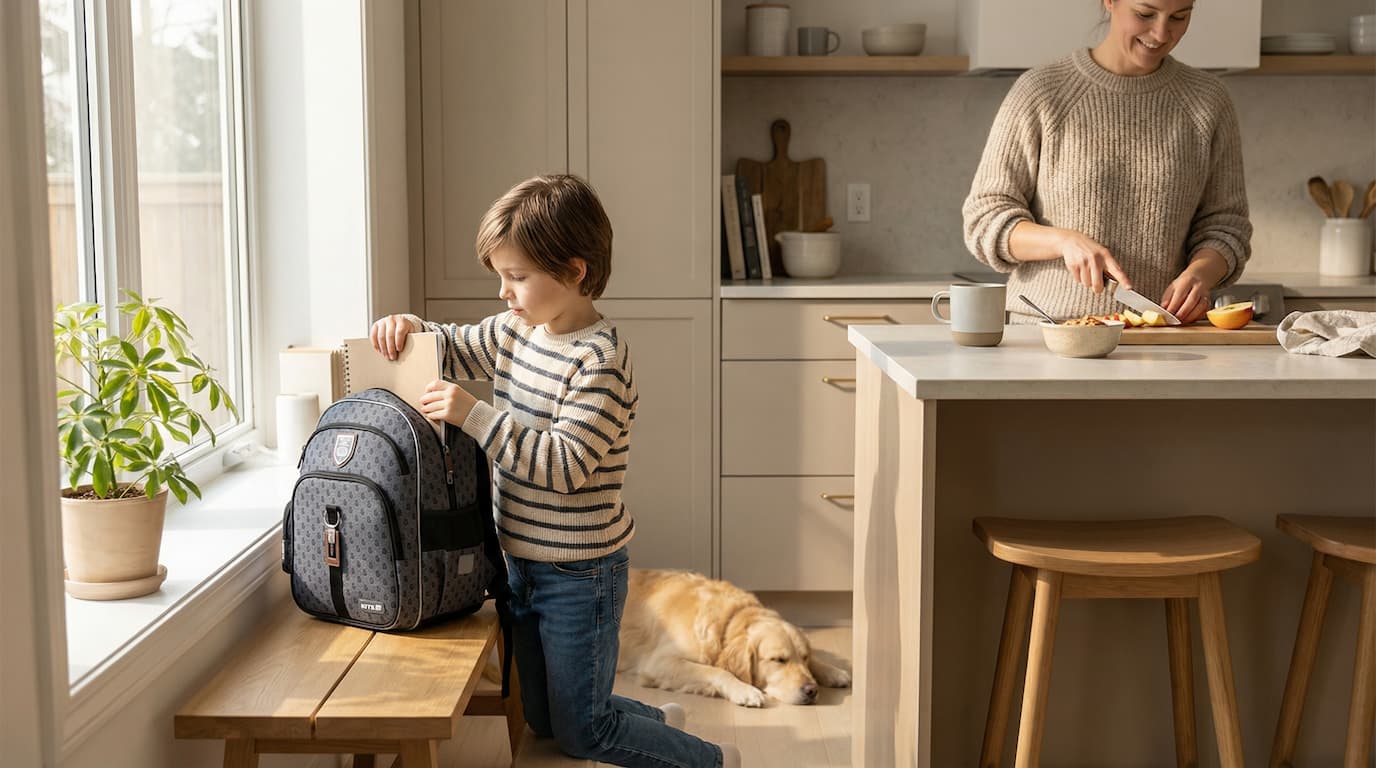
This might include a single folder or binder for school communication, labeled bins or cubbies at home, wall hooks for coats and bags, visual schedules or checklists, and school backpacks for kids that are kept light and regularly cleared out.
The specific tools matter less than consistency. When children know where items belong, they spend less time searching and more time focused on what they need to do next.
Physical Comfort and Readiness
Physical comfort plays a quiet but important role in how children handle the school day. Discomfort—whether from clothing, hunger, or carrying too much can make it harder to concentrate and regulate emotions.
Regarding what children carry, the American Academy of Pediatrics recommends that a child’s backpack weigh no more than 10–15% of their body weight to reduce strain and fatigue. This guideline provides a practical reference point for families and can be reviewed at HealthyChildren.org.
A quick weekly clean-out helps remove unnecessary items and keeps loads manageable.
Building Independence by Age
As children grow, their morning responsibilities can grow with them:
-
Ages 5–7: Focus on physical independence putting on shoes, zipping coats, filling water bottles
-
Ages 8–10: Add preparation skills checking folders, packing lunches with guidance
-
Ages 11–12: Introduce time awareness setting alarms, tracking schedules
Gradually handing over responsibility builds confidence and helps children feel capable rather than rushed.
When Mornings Don’t Go as Planned
Even the best routines will occasionally fall apart. Lost shoes, spilled cereal, or unexpected delays happen to every family.
When that happens, prioritizing connection over correction makes a difference. A calm reset rather than escalating stress helps children leave the house feeling supported. A mismatched outfit or imperfect hair is far less important than starting the day emotionally steady.
A Final Thought
Consistency matters more than perfection. Predictable rhythms, simple organization, and shared preparation help children develop skills they’ll use far beyond elementary school. Over time, these small, repeatable habits turn chaotic mornings into calmer starts setting the tone for more confident school days ahead.


