How CoComelon Addresses Parental Mental Health Struggles Through Judgment-Free Support
The United States Surgeon General issued an unprecedented advisory in 2024 declaring parental stress an urgent public health concern. The report revealed staggering statistics: 41% of parents report feeling so stressed most days that they cannot function, and 48% say their stress is completely overwhelming.
These figures stand in stark contrast to non-parents, where only 20% and 26% report similar levels, respectively. As mental health experts work to address this crisis, an unexpected player has entered the conversation about parental support.
CoComelon, the children’s entertainment brand, has positioned itself not just as content for kids but as a resource explicitly designed to ease the burden on stressed caregivers.
The Weight of Modern Parenting
Recent research from the American Psychological Association confirms that parenting stress has reached crisis levels. Parents consistently report higher stress than other adults, with 33% experiencing high stress in the past month compared to just 20% of non-parents. The sources of this stress are multifaceted and interconnected.
Financial strain tops the list of parenting stressors. Childcare costs have risen approximately 26% over the past decade, with one quarter of parents reporting periods when they lacked money for basic necessities.
Time demands compound this pressure. Between 1985 and 2022, average employment hours for mothers increased from 20.9 to 26.7 hours weekly, while time spent on primary childcare also jumped 40% during the same period. Fathers experienced similar patterns, with employment hours rising 4% and childcare time increasing 154%.
Beyond these practical concerns, parents face newer challenges that previous generations did not confront. Nearly 70% of parents report that technology and social media have made parenting more difficult.
Three-quarters worry constantly about children’s safety, including concerns about bullying, substance use, and school violence. Perhaps most telling, approximately two-thirds of parents experience loneliness and social isolation.
The Judgment Factor
Surgeon General Vivek Murthy’s advisory identified a particularly insidious contributor to parental stress: the culture of guilt and shame surrounding parenting decisions. “Guilt and shame have become pervasive,” the report states, “often leading them to hide their struggles, which perpetuates a vicious cycle where stress leads to guilt which leads to more stress.”
Research bears this out. Studies reveal that approximately 61% of mothers report feeling criticized for their parenting choices online. This phenomenon extends to nearly every aspect of child-rearing, with screen time decisions drawing particularly intense scrutiny.
Social media amplifies these pressures through what experts call a “culture of comparison.” Parents scroll through feeds filled with elaborate school lunches, perfectly organized playrooms, and meticulously documented developmental milestones, creating unrealistic expectations that most families cannot meet.
“That’s the poison. Comparing to anyone is toxic,” Julie Romanowski, a Vancouver-based parenting coach, told CBC News. “Social media is not helping that. It has tanked so many parents’ mental health.”
A Different Approach to Support
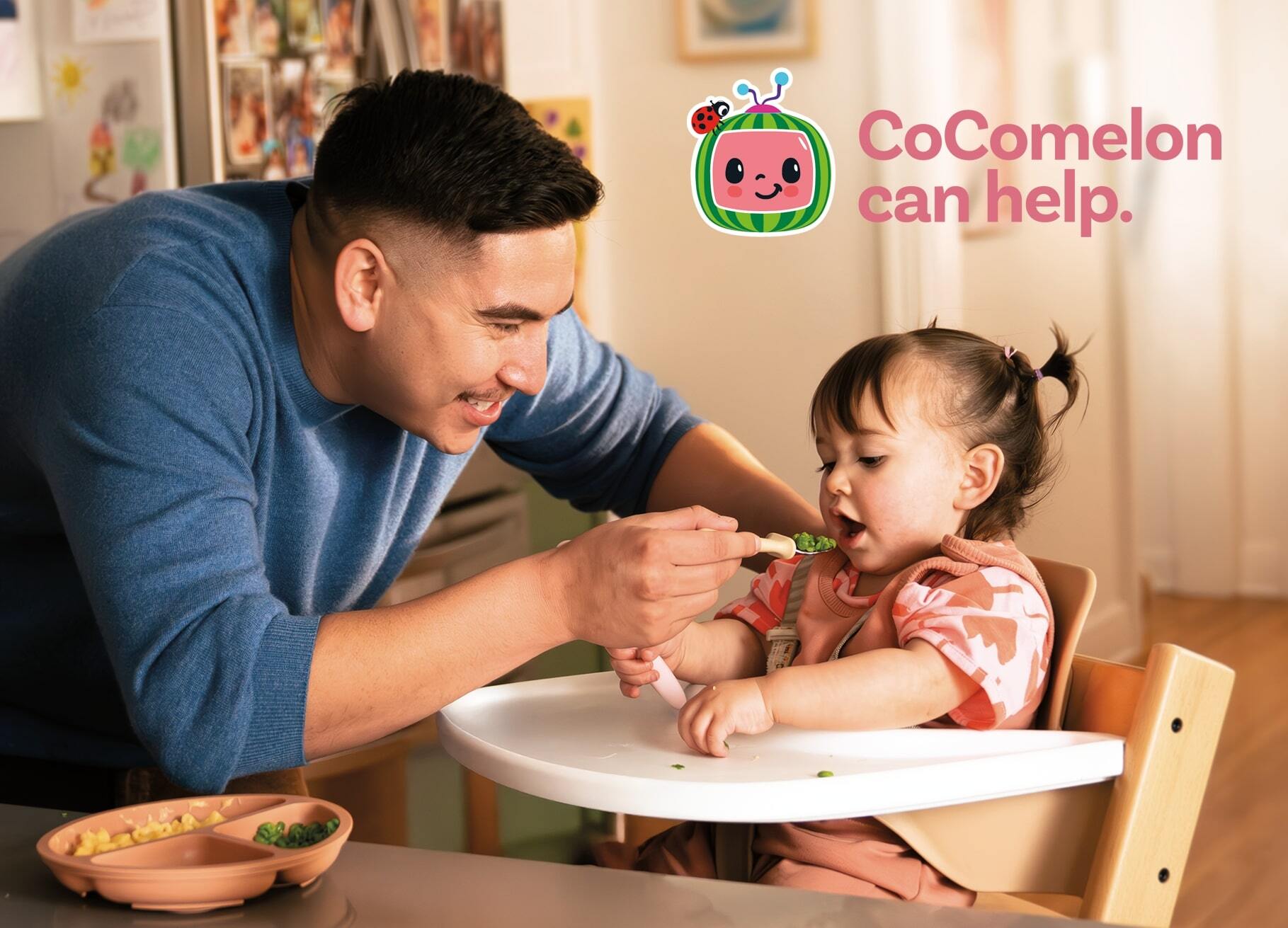
Against this backdrop, CoComelon launched its “CoComelon Can Help” initiative, explicitly designed to meet parents without judgment. The campaign represents a fundamental shift in how a children’s brand positions itself in relation to caregivers.
The philosophy behind CoComelon’s initiative is to offer a real-world judgment-free resource, akin to a friend showing up with a hot latte in a moment of need. No explanation needed, no long-winded diatribe about how “it’s just a phase.” CoComelon just meets you where you are.
This approach intentionally avoids adding to the already overwhelming chorus of parenting advice. Rather than prescribing what parents should do, the initiative acknowledges the reality that parenting is challenging and offers practical tools to navigate specific difficulties. The distinction matters. Parents overwhelmed by conflicting advice and impossible standards need support, not additional instructions.
Practical Tools for Daily Challenges
The program’s most direct contribution to reducing parental stress comes through content that addresses common daily struggles. These musical frameworks transform potentially frustrating moments into manageable transitions.
The “Potty Training Song” has garnered over 424 million views, making it the most-watched potty training video on YouTube. Parents dealing with this notoriously challenging milestone report that the catchy tune provides both structure and emotional support.
The song removes pressure from what can become a battle of wills between parent and child.
Bedtime routines present another universal challenge. The “Yes Yes Bedtime Song” has accumulated over 1.7 billion views, with countless parents incorporating it into evening rituals.
The predictable melody signals transition time, often easing the difficult shift from activity to rest. Many caregivers describe how this simple tool transformed bedtime from their most dreaded hour into a special bonding moment.
Mealtime struggles affect nearly every family with young children. “Yes, Yes Vegetables,” with more than 3.3 billion views, addresses picky eating without creating the power struggles that typically surround nutrition. The musical approach encourages healthy choices through playfulness rather than coercion, reducing stress for both parents and children.
These numbers tell a story beyond simple popularity. Billions of views represent billions of moments when stressed parents found a tool that worked, reducing their burden incrementally but meaningfully.
Normalizing Media Without Shame
Perhaps the initiative’s most significant contribution to parental mental health involves removing guilt around media use.
Screen time has become one of the most judgment-laden aspects of modern parenting, with parents facing criticism regardless of their choices. After all, CoComelon wouldn’t be one of the top-viewed programs on Netflix if parents and caretakers weren’t turning it on.
Guidance from the Center for Scholars and Storytellers at UCLA supports a more nuanced view.
The guidance indicates that media can serve as a powerful caregiving tool when used intentionally to help children prepare for experiences, build routines, and develop emotional skills. The key lies in thoughtful selection and parental engagement, not in whether screens are used at all.
This reframing matters tremendously for parental mental health. When parents stop viewing media use as a source of shame and instead see it as one tool among many, stress levels can decrease substantially. The guilt that Surgeon General Murthy identified as perpetuating stress cycles begins to dissipate.
Building Community to Combat Isolation
Two-thirds of parents experiencing loneliness represent a public health concern equal to the stress statistics. Research consistently shows that social isolation amplifies stress and undermines mental health. CoComelon addresses this through multiple channels, creating opportunities for connection among families facing similar challenges.
The shared experience of using the same songs and episodes provides common ground. Parents meeting at playgrounds or preschool orientations discover mutual reference points, facilitating conversations that might otherwise feel awkward.
This shared vocabulary around daily routines and developmental milestones helps break down the isolation many caregivers experience.
Live tour events amplify these connections. Families gathering to watch children sing and dance to familiar content create natural bonding opportunities.
Many parents report connecting through social media after meeting at these events, with initial entertainment-based connections evolving into sustained support networks.
The “Melon Squad” initiative extends this community building into tangible support. Partnerships with organizations like Hot Mess Express, Children’s Hospital Los Angeles, and Fit4Mom create real-world resources.
Hot Mess Express organizes mom’s night out events and provides home cleaning services for nominated families. Children’s Hospital Los Angeles offers coffee carts for parents of children in treatment and restocks hospital libraries with new books. These partnerships demonstrate how media brands can facilitate actual community support beyond digital engagement.
The Link Between Parental and Child Wellbeing
The Surgeon General’s advisory emphasizes that parental mental health directly impacts children. Research shows that children with a primary caregiver experiencing poor mental health are twice as likely to have mental, behavioral, or developmental concerns and four times more likely to have health problems.
This connection makes supporting parental wellbeing not just a quality-of-life issue but a matter of child welfare. When parents have access to tools that reduce daily stress, when they feel less judged and more supported, when they experience community rather than isolation, children benefit directly.
CoComelon’s approach recognizes this interconnection. Content that helps children through transitions simultaneously reduces parental stress. Songs that make bedtime smoother give exhausted parents precious time back. Tools that ease mealtime battles preserve everyone’s mental energy for more meaningful interactions.
Shifting the Cultural Conversation
The “CoComelon Can Help” campaign represents a broader shift in how society might approach parental support. Rather than adding to the endless stream of advice telling parents what they should be doing differently, the initiative offers acceptance paired with practical assistance.
This matters particularly given research showing that 70% of parents believe parenting is harder now than 20 years ago. Whether or not the data definitively support this perception, the fact that parents feel this way indicates a need for different approaches to support.
The judgment-free framework acknowledges several realities. First, there is no single correct way to parent. Second, all families face challenges, regardless of resources or circumstances. Third, practical tools matter more than theoretical advice. Fourth, community and connection combat the isolation that amplifies stress.
Research on Support Systems
Studies examining parental well-being consistently identify social support as a protective factor against stress and mental health challenges. Research on parental stress and well-being indicates that parents with access to supportive communities experience better mental health outcomes and higher confidence in their abilities.
Meta-analyses investigating the relationship between parental stress and well-being emphasize that interventions focusing on practical support and community building show promising results. The most effective approaches provide tangible assistance rather than simply education or advice.
This research base supports CoComelon’s model. Practical tools that reduce daily stress, combined with community building that combats isolation and a judgment-free stance that reduces shame, align with evidence-based approaches to supporting parental mental health.
Meeting Families Where They Are
The initiative’s tagline, “CoComelon Can Help,” signals both humility and pragmatism. The phrasing acknowledges that the program cannot solve all parenting challenges. It can, however, offer assistance with specific, concrete difficulties that contribute to overwhelming stress.
Heil describes this as “meeting you where you are, and really helping you and your family grow.” This philosophy respects parents’ autonomy while providing resources they can choose to use.
It avoids the prescriptive tone that characterizes much parenting advice, instead offering tools and letting families decide what works for their circumstances.
For parents already stretched beyond capacity, this approach reduces rather than adds to their burden. They need not implement complex strategies or reorganize their lives. Simple songs integrated into existing routines provide immediate, practical help.
Beyond Entertainment
When the U.S. Surgeon General designates an issue as an urgent public health concern, it signals that traditional approaches have proven insufficient. The parental mental health crisis requires creative solutions that address both structural challenges and cultural factors.
While policy changes around childcare costs, parental leave, and workplace flexibility remain critical, cultural shifts around judgment and support also matter enormously. Programs that normalize struggles, reduce shame, build community, and provide practical assistance represent meaningful contributions to addressing this crisis.
CoComelon’s positioning as a support system for stressed parents demonstrates how children’s media can extend beyond entertainment into genuine family assistance.
The billions of views parents generate represent not passive consumption but active problem-solving. Families return repeatedly to content that reduces their daily stress, that helps them through difficult moments, that makes parenting feel slightly more manageable.
In a landscape where parents face unprecedented pressure and judgment, initiatives that offer acceptance, practical tools, and community connections address genuine needs.
As researchers and policymakers work to support parental mental health, understanding which approaches actually help families navigate daily challenges becomes crucial. The data suggest that judgment-free support, practical assistance, and community building offer meaningful paths forward in addressing the parental well-being crisis.