Food Chain for Kids: Simple Guide to Nature’s Connections
What happens after a butterfly sips nectar from a flower? That tiny moment is actually part of something huge happening all around us.
Right now, in backyards, parks, and even the ocean, nature is playing an incredible game of “who eats what.” This game has been going on for millions of years, and it keeps our planet healthy and balanced.
Welcome to the world of food chains! Think of them as nature’s recipe for survival.
Every plant, animal, and tiny creature plays a part in this amazing system. Whether someone is curious about science or just loves animals, understanding food chains will change how they see the world around them.
Let’s jump in and find out how everything in nature is connected!
What Is a Food Chain?
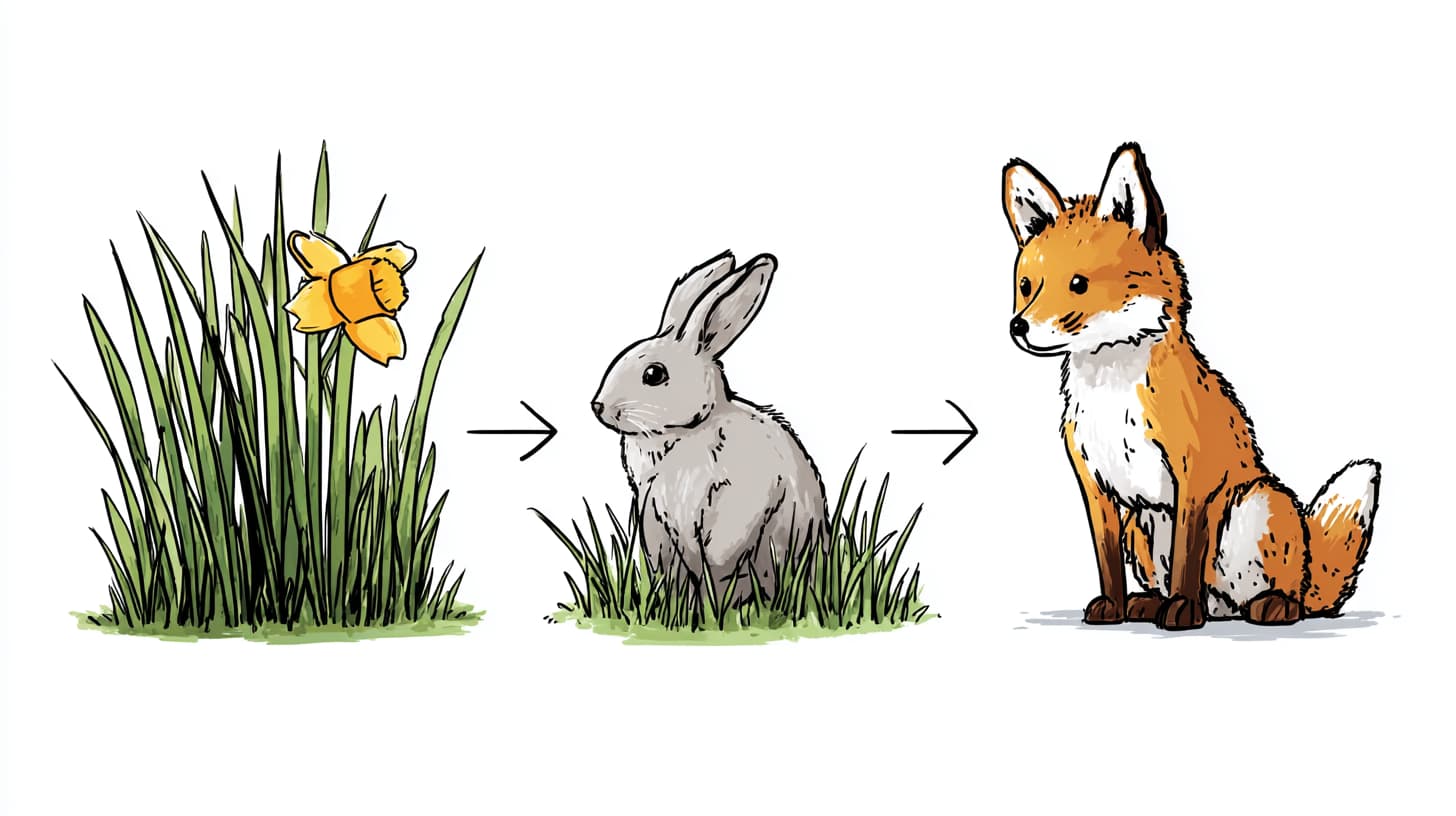
Imagine watching a rabbit munch on grass in a backyard. Then a fox appears and chases the rabbit. That’s a food chain in action!
A food chain is nature’s way of showing who eats whom. It’s like a step-by-step path that helps us understand how energy moves from one living thing to another.
Every food chain has three important parts. First, we have producers. These are plants and algae that make their own food using sunlight. Next come consumers. These are animals that eat plants or other animals to get energy.
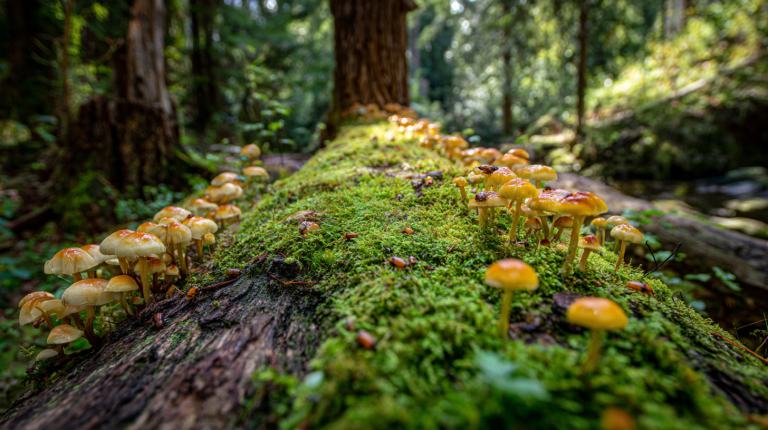
Finally, decomposers like mushrooms and bacteria break down dead plants and animals, returning nutrients to the soil.
Energy starts with the sun, flows to plants, moves through animals, and eventually returns to the earth. It’s nature’s perfect cycle that keeps everything connected and alive!
The Levels in a Food Chain
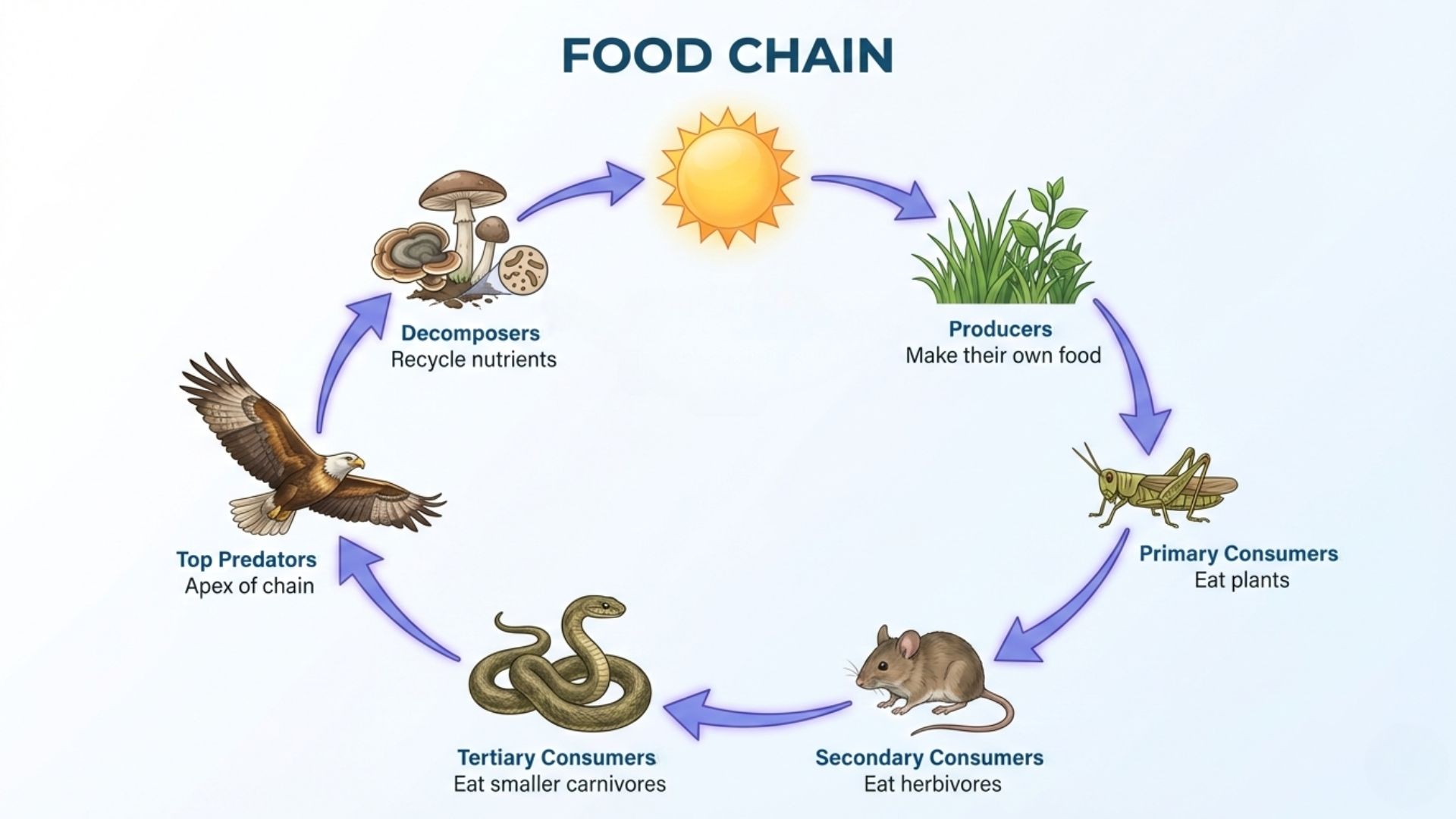
Think of a food chain as a staircase where energy climbs from one step to the next.
|
Sun ↓ Producers (Plants & Algae) These are the food makers of nature. Plants use sunlight, water, and air to create their own food through a process called photosynthesis. They’re called producers because they produce energy that starts the entire food chain. ↓ Primary Consumers (Herbivores) These are plant eaters like rabbits, deer, caterpillars, and cows. They get their energy by munching on leaves, grass, fruits, and seeds. Herbivores are always the first animals in any food chain. ↓ Secondary Consumers (Carnivores) These are meat eaters that hunt herbivores. Think of foxes eating rabbits, frogs eating insects, or small fish eating tiny shrimp. They get energy by consuming the animals that ate the plants. ↓ Tertiary Consumers (Top Predators) These are the hunters at the top of the food chain. Eagles, lions, sharks, and wolves are examples. They eat other carnivores and usually have no natural predators themselves. They’re the kings and queens of their habitats. ↓ Decomposers (Bacteria & Fungi) These are nature’s cleanup crew. Mushrooms, mold, worms, and tiny bacteria break down dead plants and animals. They turn everything back into nutrients that soak into the soil, giving plants the food they need to grow. ↓ Nutrients return to soil and the cycle starts again |
Each level depends on the one before it. Plants capture energy from sunlight and turn it into food through photosynthesis.
When a grasshopper eats a leaf, that energy transfers to the grasshopper. If a frog eats the grasshopper, the energy moves again.
Notice how energy decreases as we move up? That’s because some energy is used at each level for things like moving, breathing, and staying warm.
By the time we reach the top predators, only a small amount of the original energy remains. That’s why there are always more plants than herbivores, and more herbivores than carnivores in nature.
Food Chain vs Food Web
Before we dive deeper, let’s clear up something important. Food chains and food webs aren’t the same thing!
| Food Chain | Food Web |
|---|---|
| Shows a single pathway of who eats whom | Shows multiple, interconnected food chains |
| Linear and simple: Grass → Rabbit → Fox | Complex network with many arrows and connections |
| One producer leads to one consumer, then another | One animal might eat several different foods |
| Easy to understand but limited | More realistic view of nature |
| Example: Algae → Minnow → Bass → Eagle | Example: A mouse might be eaten by a snake, owl, or fox |
In real life, animals don’t just eat one thing. A bird might snack on seeds, worms, and insects. A bear eats fish, berries, and honey. Food webs show all these connections at once, creating a tangled map of nature’s dining habits.
Why Food Chains Matter?
Understanding food chains isn’t just a fun science lesson. It helps us see why every creature plays an important role.
1. Balance in nature: Food chains keep animal populations in check. Too many rabbits? Foxes will have plenty to eat and their numbers grow. Fewer rabbits? Fox populations naturally drop. It’s nature’s way of maintaining harmony.
2. The domino effect: When one link disappears, the whole chain feels it. Imagine if all the bees vanished. Flowers wouldn’t get pollinated, so fewer plants would grow. Herbivores would struggle to find food, and then carnivores would too. One missing piece creates a ripple effect through the entire ecosystem.
3. Backyard connections: Every time someone sees a bird catching a worm or a butterfly landing on a flower, they’re watching a food chain moment. Even the vegetables in gardens are part of a food chain.
4. Protecting our planet: When people understand food chains, they realize why protecting habitats matters. Cutting down forests or polluting rivers doesn’t just harm one species. It disrupts entire food chains that took thousands of years to develop.
Hands-On Activities to Learn Food Chains
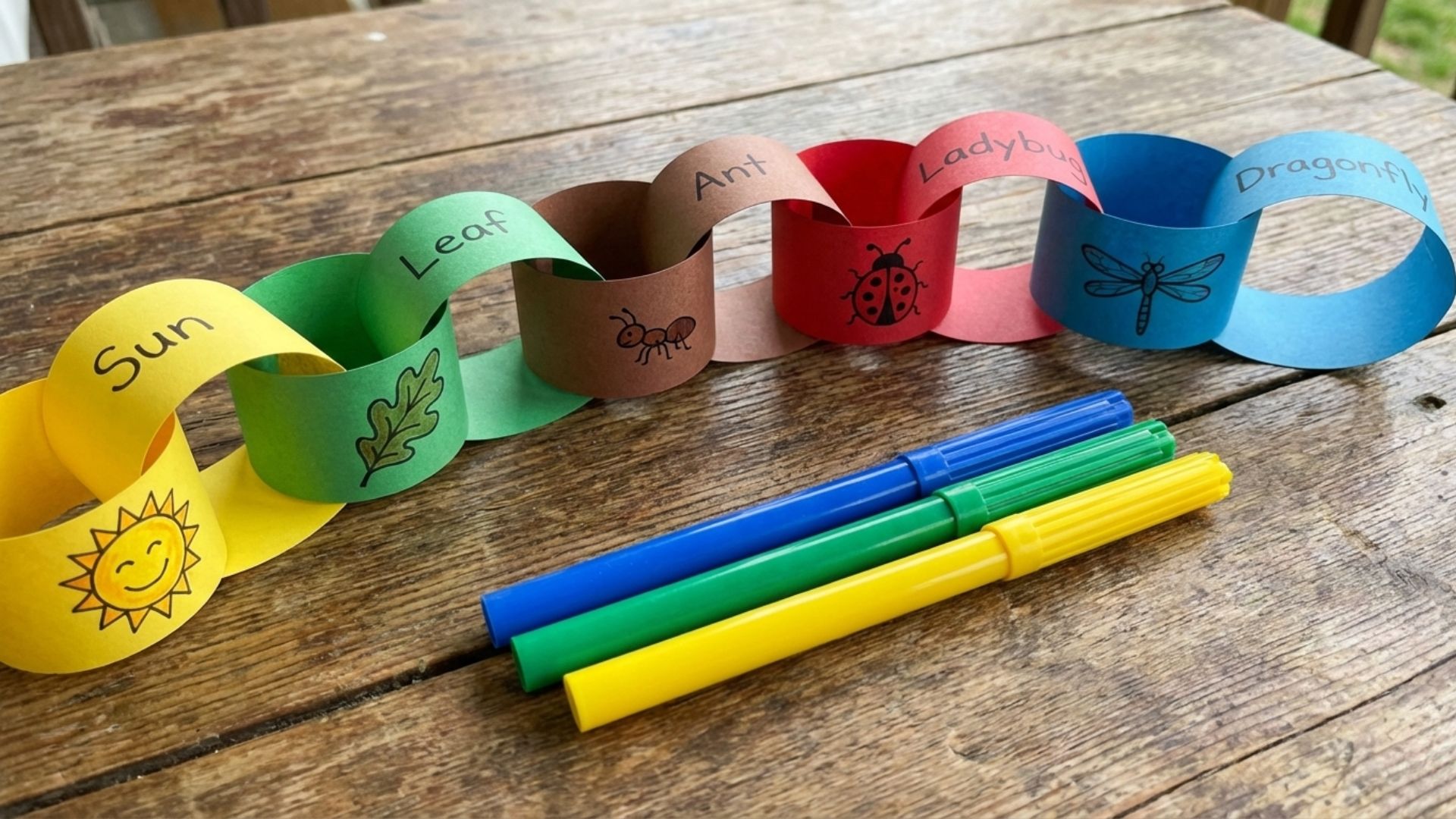
Learning about food chains becomes way more fun when kids can touch, create, and play! Reading about nature is great, but actually doing activities brings the concepts to life.
1. DIY Drawing Activity
Kids can grab some colored pencils and paper. Starting by drawing the sun at the top is a great first step. That’s where all energy begins.
Next, they can draw a plant or tree. Adding an herbivore that eats that plant, like a caterpillar or deer, comes next. Then drawing a carnivore that might eat the herbivore works well. Maybe a bird or wolf. Finally, adding decomposers at the bottom like mushrooms or worms completes the picture.
Connecting everything with arrows shows which way the energy flows. Kids can create forest food chains, ocean food chains, or even desert food chains. Trying to make five different ones shows how creative they can get!
2. Group or Classroom Games
Food Chain Tag
Teachers can assign each player a role. Producers, herbivores, or carnivores. Producers stay still. Herbivores try to tag producers to “eat” them. Carnivores chase herbivores. It shows how energy transfers through chasing and catching!
Matching Challenge
Students can create cards with different organisms written on them. Working in teams to arrange them in the correct food chain order makes it competitive. Racing against other teams to see who can build the longest accurate chain adds excitement. Mixing things up by adding organisms from different habitats keeps it fresh.
The Broken Link Game
Kids can build a food chain with classmates standing in order. Removing one person (one organism) and discussing what happens to everyone else in the chain really drives home how interconnected everything is.
3. Printable Worksheets for Practice
Parents and teachers can look for worksheets where kids cut out animal pictures and glue them in food chain order. Fill in the blank sheets help children memorize which animals are producers, consumers, or decomposers.
Coloring sheets with food chains let kids learn while being creative. Many websites offer free printables. Just searching for “food chain worksheets for kids” will show plenty of options to practice at home or school.
Conclusion
Learning about food chains unlocks one of nature’s biggest secrets!
These connections show that every living thing matters, from the tiniest ant to the mightiest lion. Next time kids step outside, they can look around with fresh eyes.
Watching the squirrel gathering acorns or the bird hunting for worms means witnessing an ancient dance of survival that keeps our planet thriving.
Now it’s time to become a food chain explorer! Kids can grab some paper and draw the chains they see in their neighborhood.
Challenging friends to a food chain game makes learning fun. Most importantly, sharing these lessons with others helps everyone understand nature better.
The more people learn about these connections, the better we can protect the amazing world we live in.