
Best Summer Camp in Riverside: 8 Options for Hot Weeks
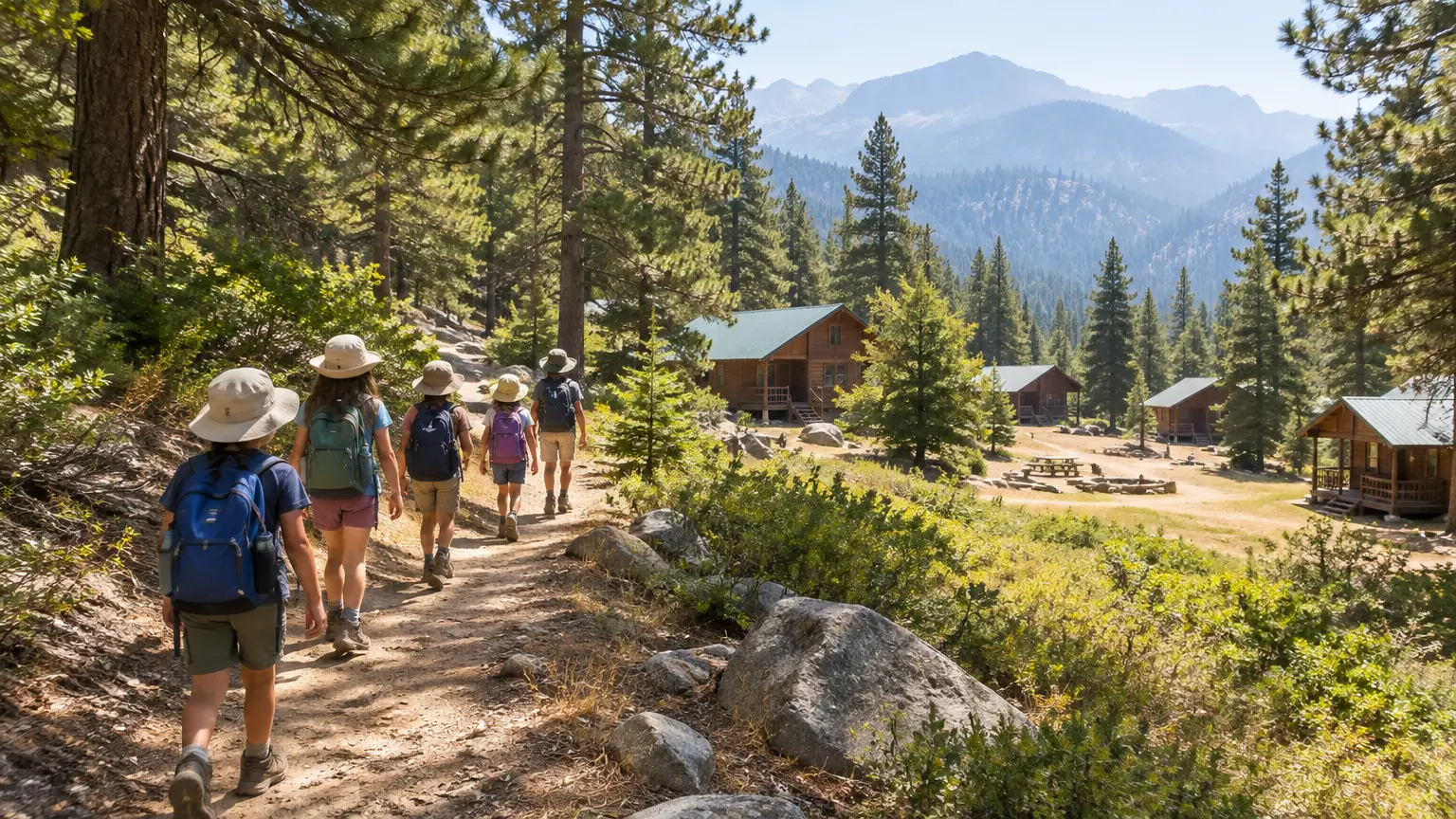
Looking for the best summer camp in Riverside, California? We already did the legwork. Riverside summers run hot, and families have two escapes: stay local in indoor labs and pools, or drive up into the San Bernardino and San Jacinto Mountains, where the air is cooler but the sun is stronger and wildfire smoke is a real possibility. We audited safety records, heat-and-air-quality plans, logistics, programs, ages, prices, and reputation to rank the eight camps that handle scorching weeks best.
How We Chose the Eight Camps

Safety outranks s’mores, so we built a 100-point scorecard that reflects that priority.
- Safety and oversight: 25 pts. We looked for accreditation, on-site health care and staff screening, as each camp describes them on its own site.
- Heat and air-quality readiness: 20 pts. Camps earned full credit only if cooler mountain air or strong indoor A/C is paired with written triggers for moving activity inside.
- Riverside logistics: 20 pts. Easy drives or bundled buses matter to families juggling carpools.
- Program depth: 10 pts.
- Age range: 10 pts.
- Cost clarity: 10 pts.
- Reputation: 5 pts.
Every camp below cleared the safety bar, answered the heat question, and still left room in the budget for sunscreen.
|
Camp |
Day / overnight |
Where & elev. |
Ages |
Heat edge |
Safety signal |
Price visibility |
Best for |
|---|---|---|---|---|---|---|---|
|
Pali Adventures |
Overnight |
Running Springs, San Bernardino Mtns |
6 to 16 |
Mountain air |
ACA and WAIC accredited |
Not publicly listed |
Camper choice |
|
AstroCamp |
Overnight |
Idyllwild, San Jacinto Mtns |
7 to 17 |
Mountain; indoor labs |
ACA accredited |
Publishes one- and two-week rates |
STEM focus |
|
YMCA Camp Edwards |
Overnight |
Angelus Oaks, San Bernardino Mtns |
Grades 1 to 9 |
Mountain setting |
ACA; CPR-certified counselors |
Ask at registration |
Classic week |
|
YMCA Camp Oakes |
Overnight |
Near Big Bear |
8 to 17 |
Mountain setting |
24-hour health center |
Posts all-in price |
High altitude |
|
Pathfinder Ranch |
Overnight |
Mountain Center |
7 to 14 |
Shorter stays |
ACA accredited |
Publishes session rates |
First-timers, horses |
|
Idyllwild Arts |
Day plus sleepaway |
Idyllwild, 5,000+ ft |
5 to 17 |
Mountain campus |
Boarding-school campus |
Program by program |
Serious artists |
|
Club SciKidz |
Day |
Riverside-area schools |
Pre-K to 15 |
Indoor classrooms |
STEM.org accredited |
Publishes camp rates |
Local STEM |
|
Summer Splash |
Day |
Hunt and Villegas Parks |
5 to 12 |
Swim lessons |
City-run staff |
City fee schedule |
Budget & long hours |
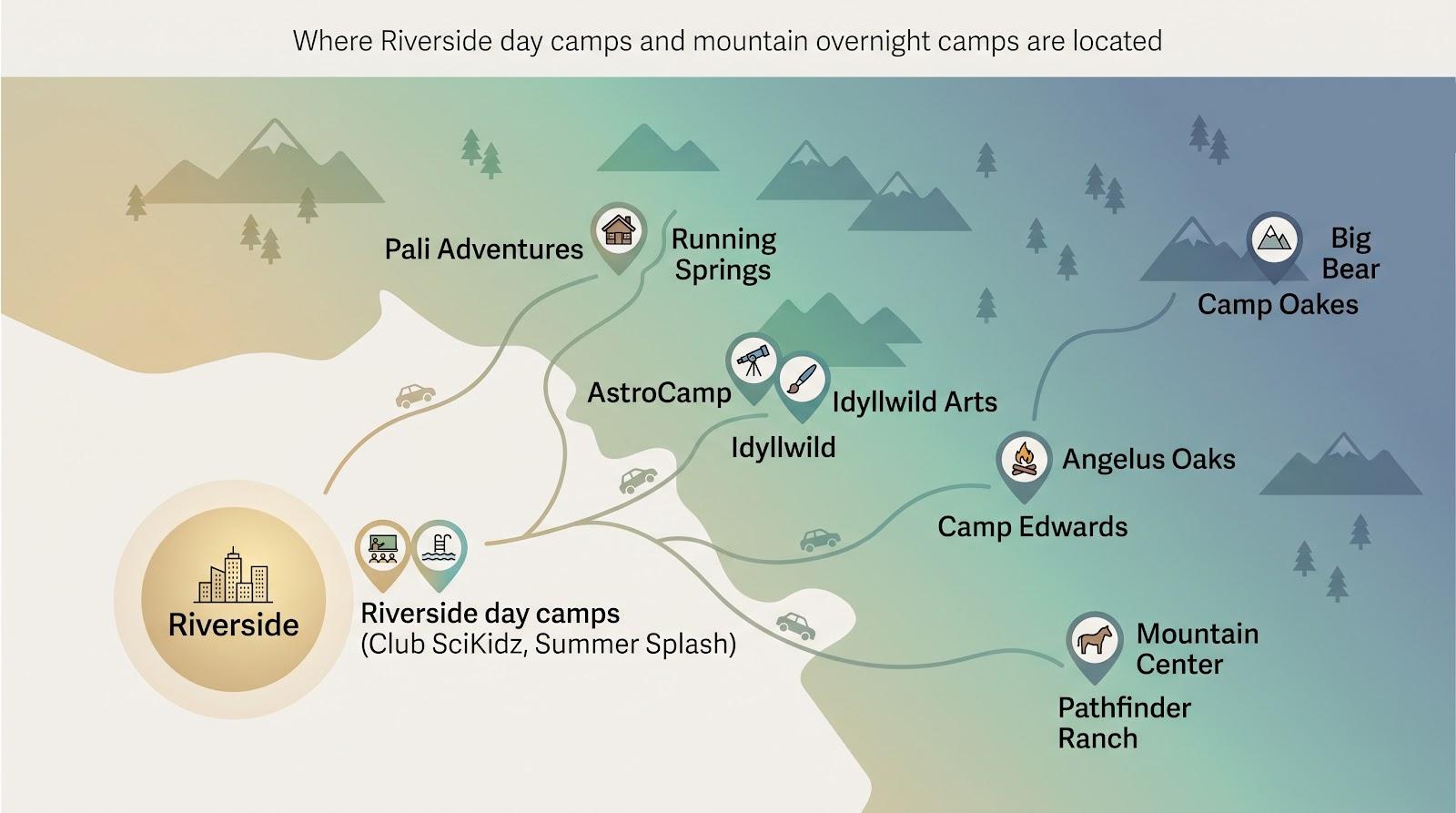
Ready to match these strengths to your child and the forecast? Keep reading.
1. Pali Adventures: Best for Camper Choice and Specialty Depth
Picture a mountainside campus in Running Springs, about 90 minutes east of Los Angeles, where campers build their own schedule. At Camp Pali, everyone picks one of 27 specialties (from flying trapeze to movie makeup to rock star) for a weeklong track of three hours each morning with certified, expert instructors. Afternoons shift to electives campers choose themselves, so kids can customize their day without losing momentum in the main track. Specialties sit in three tracks (Adventure, Creative and Performance), and campers who stay more than one week can choose a new specialty each session.
Safety is documented, not promised. Pali is accredited by both the American Camp Association (ACA) and the Western Association of Independent Camps (WAIC). Staff pass LiveScan and U.S. Department of Justice background screening and hold first aid, CPR and AED certifications. The camp also trains staff in emergency response and homesickness support.
Age tracks keep development front and center. Mini Camp (ages 6-8) offers a shorter, gently paced introduction to overnight camp. Juniors (8-12) build confidence with close counselor support, while Seniors (13-16) get more freedom to design their own schedule.
Pali does not publish pricing publicly, and families should contact the camp directly. The fee is all-inclusive: meals, lodging, activities and specialties create no add-on surprises after registration.
If your child lights up at the idea of designing a week that is truly their own, and you want accreditation-level safety to back it up, Pali Adventures belongs on your shortlist.
2. Astro Camp: Best for Stem and Mountain Adventure
Set in the San Jacinto Mountains at Idyllwild, AstroCamp turns summer break into a hands-on science residency, with days that move from astronomy labs to mountain exploration.
Who it serves. Ages 7 to 17. One-week sessions (ages 7 to 13) suit younger and first-time campers, while two-week sessions (ages 12 to 17) give older campers more choice and independence.
Safety and oversight. AstroCamp is American Camp Association accredited and is run by Guided Discoveries, which also operates Catalina Sea Camp.
Cost and value. For 2027 the camp lists $2,900 for a one-week session and $4,600 for a two-week session on its dates and rates page, with financial aid available. A non-refundable deposit of $300 (one week) or $500 (two weeks) holds a spot, enrolling before January 31 takes $150 or $200 off, and each additional sibling saves $100. Two-week campers share traditions such as a Renaissance Festival, a talent show and a formal final-night dinner.
If your child dreams in chemical formulas or constellations, AstroCamp may be the perfect launch pad.
Explore dates and rates
3. YMCA Camp Edwards: Best for A Close, Classic Mountain Week
About 45 minutes from the Redlands Family YMCA, YMCA Camp Edwards sits in the San Bernardino Mountains at Angelus Oaks. Its traditional overnight camp for 1st to 9th graders runs six days and five nights.
Safety follows the YMCA playbook: Camp Edwards is accredited by the American Camp Association, and its counselors are CPR certified and trained in first aid and lifesaving. The camp operates under a special use permit with the San Bernardino National Forest.
Activities cover classics such as the zip line, rock climbing wall, canoeing, swimming and archery.
The camp does not post its rate on its main page, so check the current registration sheet, and ask about the YMCA’s financial assistance before you register; the YMCA of the East Valley says no one should be turned away due to an inability to pay.
For families who want a cooler breeze without a marathon drive, Camp Edwards delivers the mountain week many parents still remember.
See current sessions
4. YMCA Camp Oakes: Best for High Elevation Traditional Camp
Near Big Bear in the San Bernardino Mountains, about two hours from Orange County and Los Angeles, YMCA Camp Oakes swaps Riverside’s heat for mountain air. Days fill with the zip line, canoeing, swimming, archery, a climbing tower, astronomy and campfires.
Safety and logistics. The YMCA of Orange County keeps health center staff on site 24 hours a day during its overnight camps, and transportation is included in the camp fee, so families can skip the mountain drive.
Cost clarity. The 2026 session listed $875 per camper for seven days and six nights, covering three meals a day, transportation, a camp T-shirt, a photo yearbook and all activities, with financial assistance available.
Older teens can join as Counselors-in-Training (ages 15 to 17), adding leadership training to the camp week, and a $150 nonrefundable deposit secures a spot.
Altitude tip. Remind campers to hydrate early and often.
If cooler days, star-filled nights and an all-in price check every box, Camp Oakes deserves a place on your shortlist.
Check current sessions
5. Pathfinder Ranch: Best for Horses and Shorter First Stays
Three- and four-night sessions give nervous first-timers a gentler leap into overnight camp life. Set in Mountain Center, Pathfinder Ranch serves campers ages 7 to 14, and multiple sessions can be combined into a longer stay.
Why it stands out. Horseback riding leads a lineup that also includes archery, canoeing, swimming, rock climbing, hiking and a nature center.
Safety and value. Pathfinder is American Camp Association accredited. Its 2026 summer camp page lists $760 for a four-night session and $570 for a three-night session, and scholarships are available. Three-night and four-night sessions alternate through the summer, teens ages 15 to 17 can join the Counselor In Leadership Training program, and a separate day camp for ages 7 to 12 costs $110 per day or $400 for all four days.
If your rider wants saddle time without a full week away, Pathfinder Ranch offers a horse-powered, budget-friendlier on-ramp to sleepaway camp.
See sessions and scholarships
6. Idyllwild Arts Summer Program: Best for Serious Young Artists
Idyllwild Arts turns a mountain boarding school into a live-in studio each summer. Workshops in visual arts, dance, music, dramatic arts, film, fashion design, creative writing and Native American arts are taught by teaching artists, amid towering pines more than 5,000 feet up. The campus sits about 2 miles from the center of the village, on the western slopes of the San Jacinto Mountains.
Who it serves. Kids programs start at age 5, and teen intensives (ages 13 to 17) run as day or sleepaway art camp.
Cost snapshot. Tuition depends on the workshop and on day or sleepaway attendance, so check each program’s page for current rates.
If your child’s portfolio already covers the fridge door, one concentrated week here can feel like a semester of creative growth.
Browse programs and rates
7. Club Sci Kidz Riverside: Best for Classroom Based Stem Variety
When your child would rather code a game than paddle a canoe, Club SciKidz brings the lab to them, inside Riverside-area school classrooms.
What they’ll do. The program runs 60 unique weekly camps, such as Chemistry Concoctions, where campers run 15 hands-on experiments in a week. Camps are grouped by age, and a half-day option serves the youngest campers.
Heat comfort. Most activities stay indoors, and the camp says it takes extra precautions to keep campers cool and well hydrated. Confirm how often each group goes outside and whether every room has A/C.
Cost snapshot. 2026 sessions list $520 for a full-day week with 9 a.m. to 4 p.m. hours, plus optional extended care at $35 a week pre-camp and $45 a week post-camp (prices vary by location) (see the Club SciKidz Chemistry Concoctions registration page). All fees appear up front on the registration page. Pre-camp care starts at 8 a.m., post-camp care runs to 5:30 p.m. at Riverside sites, and a pre- and post-camp bundle costs $70 a week. The half-day program for pre-K runs 9 a.m. to 1 p.m. at $445 a week, and full refunds are available until April 1.
If you need STEM depth without a mountain drive, or a week that fits between vacations, Club SciKidz delivers science goggles, not lake views.
Check themes and locations
8. Summer Splash Day Camp: Best for Local Water Play and Long Hours
Run by the City of Riverside, Summer Splash runs weekdays from 7 a.m. to 6 p.m. and includes swim lessons, a key perk for working parents who need real full-day coverage.
What kids do. Ages 5 to 12 rotate through swim lessons, arts and crafts and games at Hunt and Villegas Parks, and campers receive a free lunch through the Summer Food Program. The 2026 program skipped off-site field trips in favor of interactive on-site activities.
Heat comfort. Campers bring their own snacks, a refillable water bottle marked with their name, and spray sunscreen. Confirm how much time each group spends outdoors and where the shade is.
Cost snapshot. The city’s aquatics page lists $120 per session for residents ($180 for non-residents). Always check the live registration portal; prices can update faster than evergreen web pages.
If you need budget-friendly full-day coverage closer than the mountains, Summer Splash delivers cool relief and essential swim skills without a long drive.
Register or join the wait list
Heat, Wildfire and Air Quality Questions to Ask Every Camp
Cooler mountains and sparkling pools feel safe at first glance, but extreme heat, smoke and fast-moving wildfires can flip a schedule in minutes. The best directors publish written trigger points; your job is to confirm them.
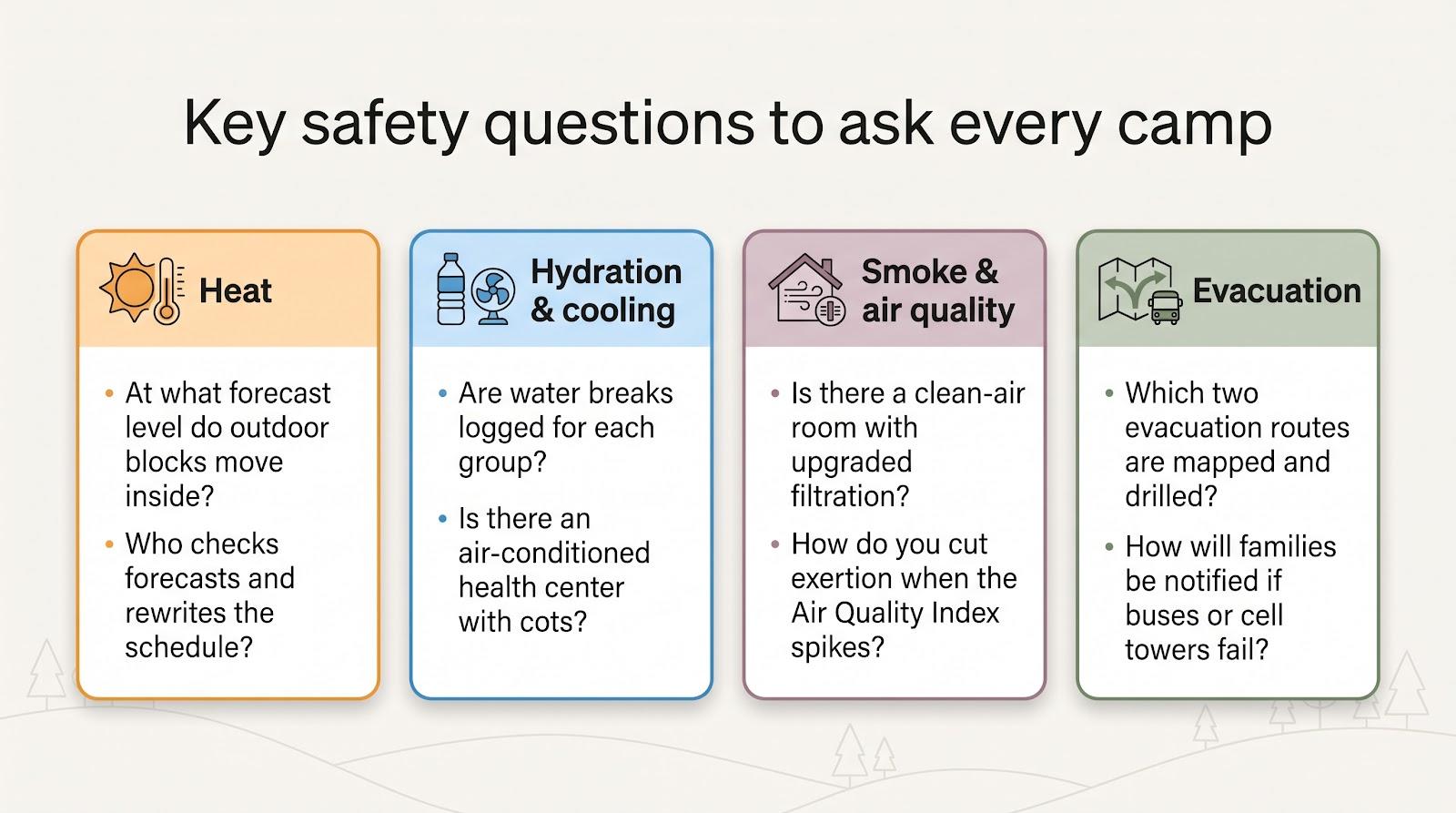
Heat. Ask at what forecast level strenuous outdoor blocks are moved or cancelled, who checks forecasts, who can rewrite the schedule and how parents are notified.
Hydration and cooling. Does the camp log water breaks? Is there an air-conditioned health center with cots and electrolyte drinks? Younger campers often miss early heat-illness cues.
Smoke. Make sure the site has an indoor clean-air room with upgraded filtration and a plan to cut exertion when the Air Quality Index spikes. Confirm that asthma action plans and rescue inhalers stay accessible.
Evacuation. Mountain roads twist and cell coverage fades. Ask for two exit routes, drill frequency and backup radios or generators. Where will families reunite if buses cannot return on time?
Directors who answer with specifics, not slogans, show the readiness that beats the forecast every time.
Riverside Day Camp or Mountain Overnight Camp?
Most families weigh three things: logistics, comfort and readiness. Use the checkpoints below to see which model fits today’s summer, plus your child’s growth curve.
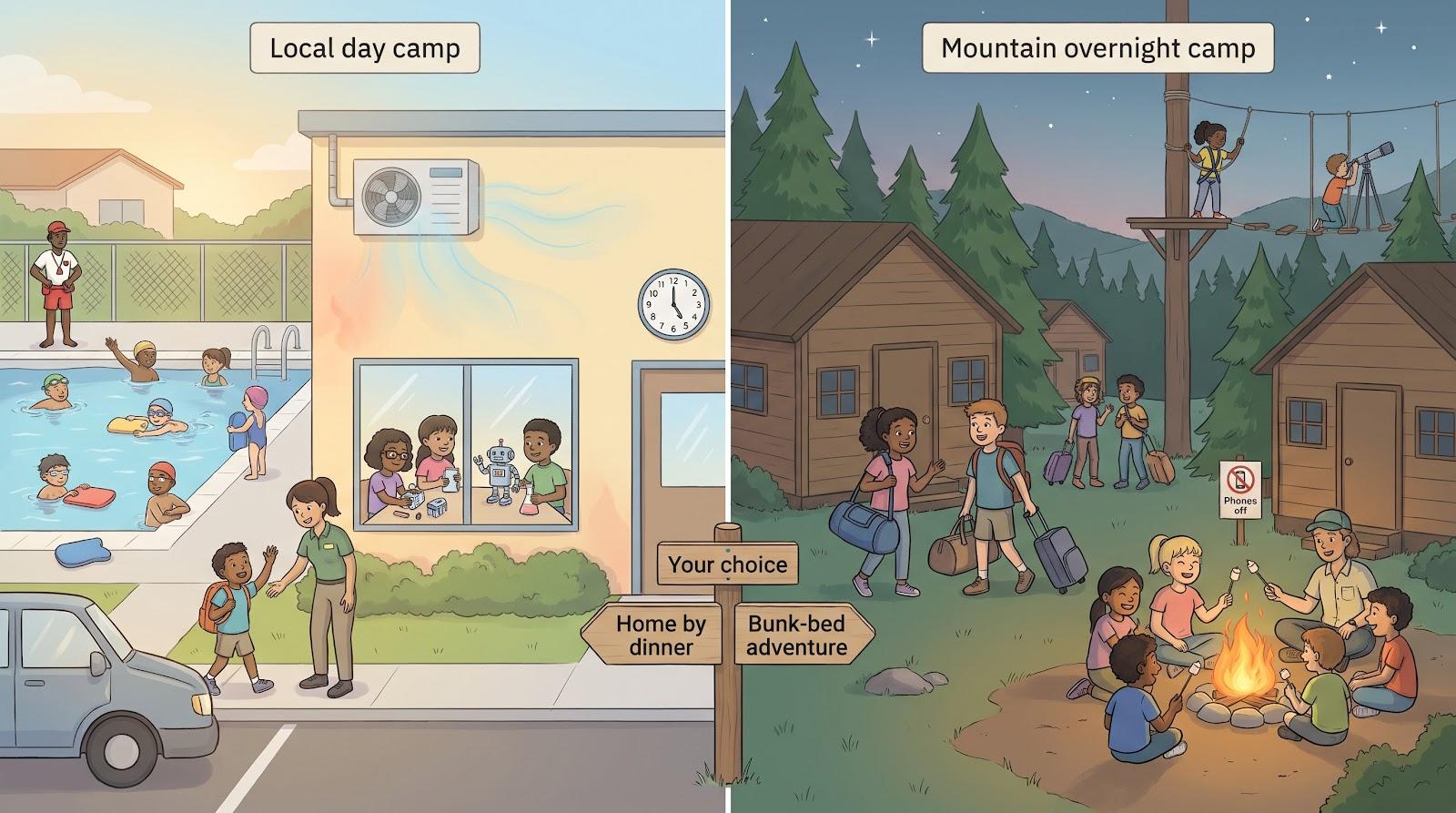
Choose a local day camp when…
- You need pickup at 5 p.m. and dinner at 6.
- Your child sleeps best in their own bed and has not mastered homesickness yet.
- Air-conditioned classrooms, indoor labs or daily pool time offer reliable heat relief.
- Medical, sensory or behavioral supports are easier to coordinate close to home.
Choose a mountain overnight camp when…
- Your camper is excited, not anxious, about bunk beds and new friends.
- Cooler mountain air matters more than nightly hugs.
- The program, such as flying trapeze, dark-sky astronomy or a full equestrian track, does not exist locally.
- You are comfortable with winding roads, patchy cell service and stricter phone rules, and the camp can show clear heat, smoke and evacuation triggers.
Involving kids in the decision and practicing nights away from home can help them feel ready for camp.
Choose local day camp when…
- You need pickup at 5 p.m. and dinner at 6. Programs such as Club SciKidz and Summer Splash fit a working parent’s clock and skip winding mountain roads.
- Your child still sleeps best at home; day camp builds routine confidence without the cabin leap.
- Air-conditioned rooms or pool blocks offer predictable heat relief. Confirm how often kids step outside and whether classroom A/C runs all day.
Choose a mountain overnight when…
- Your camper wants independence and bunk-bed friendships. A week away often accelerates growth beyond day camp drop-offs.
- Cooler air outweighs nightly hugs. Mountain afternoons usually run cooler than Riverside’s summer highs.
- Specialties win over drive time. Flying trapeze at Pali, astronomy labs at AstroCamp or the climbing tower at Camp Oakes do not exist inside city limits.
Still undecided? Tour both styles, listen to your child’s gut reaction and read the refund and weather-modification policies before you pay a deposit. A confident camper, plus a clear heat, smoke and evacuation plan, signals the right choice.
Make Your Shortlist Before Registration Fills
The best camp is the one that suits your child, your calendar and your heat-comfort line. Pick two or three front runners now, then pull each handbook while seats remain.
- Call or email directors with the same safety, heat, smoke and evacuation questions so answers line up.
- Confirm the current tuition, refund window and scholarship deadlines; rates can shift between seasons.
- Double-check ages served, accreditation status and session dates within two weeks of registering.
Once the details match your needs, place the deposit. Early clarity lets your camper start counting down with excitement, not last-minute stress.
Conclusion
Riverside summers will stay hot, yet the right camp can turn that challenge into a highlight reel, not a headache.
- Choose by fit. Pali Adventures leads for specialty choice, AstroCamp for budding scientists, YMCA Camp Edwards and Camp Oakes for classic mountain weeks, Pathfinder Ranch for a shorter horse-powered stay, Idyllwild Arts for conservatory-style creatives, and Club SciKidz or Summer Splash for local, air-conditioned coverage.
- Double check the details. Before you click “enroll,” refresh each camp’s 2027 dates, fees and accreditation. Policies can change faster than evergreen listicles.
- Ask the same safety, heat, smoke and evacuation questions so answers line up side by side.
Lock in your choice early, and your child can count down to cooler days, new friends and a story worth telling long after summer ends.
Frequently asked questions
Are mountain camps always cooler than Riverside?
Usually, yes, but heat waves still reach the mountains, and the sun is stronger at elevation, so sunscreen and shade matter as much as the cooler air. Ask each camp how it modifies schedules when the thermometer refuses to drop.
How can I tell whether my child is ready for overnight camp?
Look for everyday independence: showering solo, sleeping away from home, asking adults for help and managing basic hygiene. Run a practice sleep-over, talk through homesickness and involve your child in choosing the camp; shared ownership builds confidence.
What should parents ask about heat, smoke and evacuation plans?
Get thresholds, not slogans.
- At what heat level do sports or hikes move indoors?
- Where is the filtered air room if wildfire smoke rolls through?
- Which two evacuation routes are mapped, and how will parents be notified if cell towers fail?
Specific numbers signal true preparedness.
What should families know about phone-free camp?
Many overnight camps limit or collect phones so campers can unplug. A 2026 study of 192 teens at a device-free summer camp in Maine found their mental well-being scores rose over about three weeks, and about 80% reported a strong sense of belonging at camp, compared with 65% at school, while 40% said making friends was easier at camp, though researchers could not tell whether removing phones alone caused the change (Newson et al., Mental Health and Prevention, 2026). Scores rose by an average of 10 points, and teens who arrived with more distress gained the most. The study ended when camp did, so researchers do not know whether the gains lasted at home. Present the rule as a break, not a punishment, and kids usually adapt faster than parents.


