Is Fencing Safe for My Child? Debunking 3 Common Myths
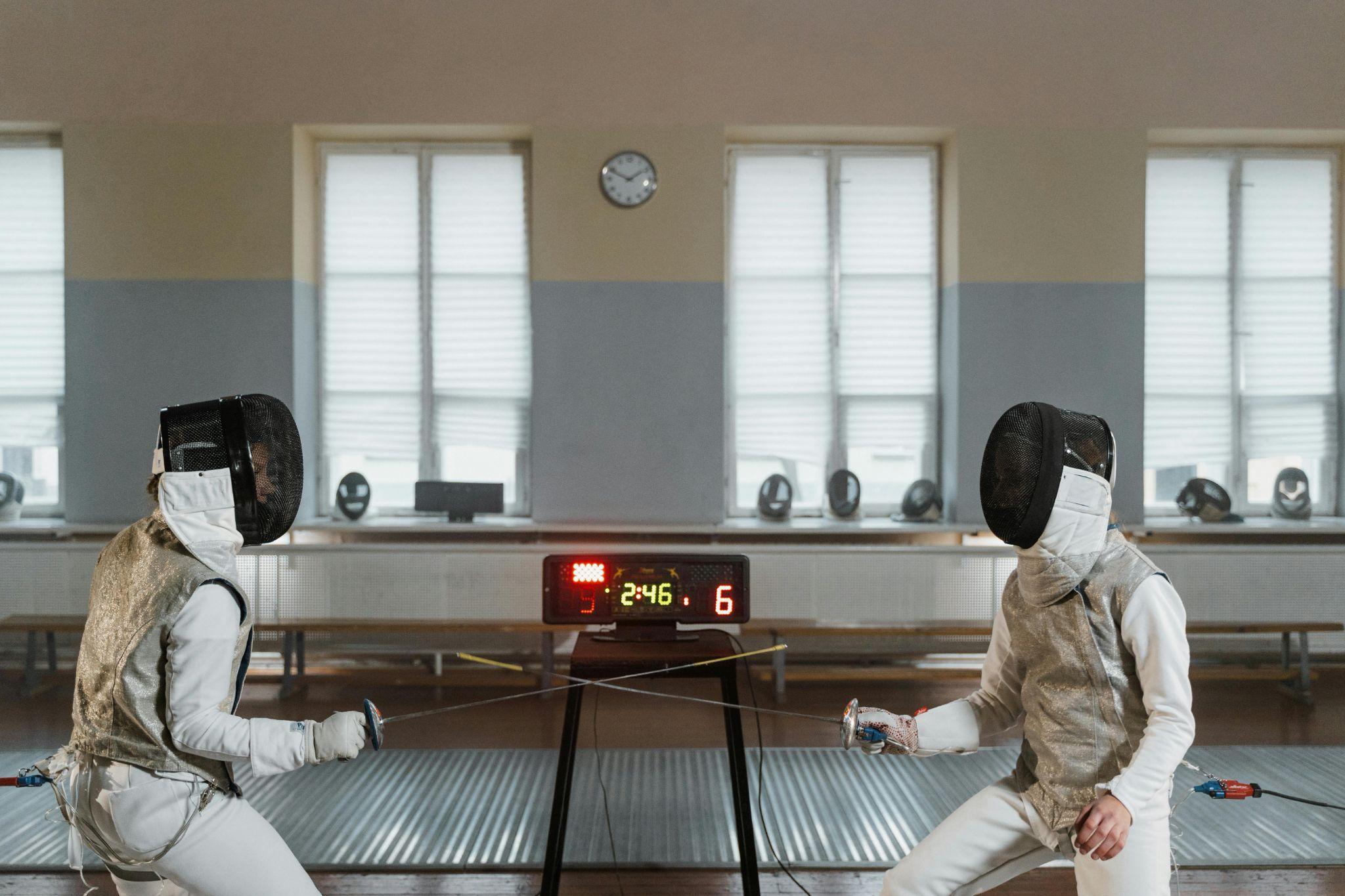
When you tell other parents your child is taking up a private fencing class in Singapore, the reaction is usually a mix of “That’s so cool!” and “Wait, isn’t that dangerous?”
It is a fair question. From the outside, fencing looks like two people trying to stab each other with steel blades. However, as any fencing coach in Singapore will tell you, the reality is far more “high-speed chess” than “pirate duel.”
First and foremost, if you are looking at fencing clubs, don’t just look at the trophies. Look at the safety culture:
- Certified coaches: Are the coaches past or current members of the national fencing team? Are they medically certified?
- Gear inspection: Does the club regularly check its masks for dents and its jackets for holes?
- Supervision: Are beginners allowed to “free-fence” without a coach present? (They shouldn’t be).
- Warm-ups: Does the class start with dynamic stretching to prevent muscle strains?
If you’re still on the fence about enrolling your child, here is a direct, myth-busting look at the safety of modern fencing.
Myth 1: The “swords” Are Dangerous
The biggest misconception is the weapon itself. In modern fencing, we use three blades: the foil, the épée, and the sabre. None of them have sharp edges or points.
The tips are either blunt or covered with a spring-loaded button that only registers a “hit” when it makes contact with a specific amount of pressure.
Additionally, fencing blades are made of high-quality steel (often Maraging steel for advanced competitors) designed to bend upon impact. This flexibility absorbs the energy of the hit, preventing the force from being transferred directly to the opponent.
Myth 2: My Child Will Get Seriously Injured
Let’s look at the numbers. Research consistently shows that fencing has one of the lowest injury rates in competitive sports.
According to various sports medicine studies, the injury rate in fencing is lower than in:
- Soccer
- Basketball
- Football
- Cheerleading
Most fencing injuries are minor strains or “fencer’s elbow”—typical overuse injuries found in any sport. Serious “penetration” injuries are virtually non-existent in modern clubs due to rigorous equipment standards.
Fencing gear is also designed to withstand significant force. The safety of the fabric is measured in Newtons (N), representing the amount of force the material can resist before a puncture occurs.
|
Equipment Piece |
Beginner Standard |
Competitive/FIE Standard |
|---|---|---|
|
Mask |
350N |
1600N |
|
Jacket/Breeches |
350N |
800N |
|
Underarm Protector |
350N |
800N |
To put this in perspective, 800N is roughly equivalent to 180 lbs of force concentrated on a tiny point. Most children cannot generate anywhere near that amount of force in a lunge.
Myth 3: Fencing Encourages Aggression
Some parents worry that “sword fighting” will make their kids more aggressive at home or school. The opposite is true. Fencing is a sport of extreme discipline.
- Strict etiquette: Every bout begins and ends with a salute to the opponent, the referee, and the audience. Failure to salute can result in immediate disqualification.
- Emotional control: If a fencer loses their temper, they lose their focus. High-level fencing requires a calm, analytical mind.
- Respect for rules: The referee has absolute authority. Children learn very quickly that respect for the official and the opponent is the only way to progress.
The Real Risks & how To Manage Them
Like any athletic endeavor, fencing isn’t 100% risk-free. Here is what we actually watch out for and how we prevent it:
1. Bruising
Yes, your child will likely get a bruise at some point. It’s part of the sport. We minimize this by:
- Ensuring the jacket fits properly (a loose jacket allows the blade to “snag” and bruise).
- Encouraging the use of a plastic chest protector (standard for girls, optional but recommended for boys).
2. Overheating
Fencing suits are thick. To manage heat:
- We enforce frequent water breaks.
- We use moisture-wicking athletic gear under the suit.
3. Trips & falls
Fencing happens on a piste (a long, narrow strip). Rapid footwork can occasionally lead to a tripped ankle.
We teach proper footwork mechanics—heel-to-toe—before we ever put a blade in a child’s hand.
Conclusion
Fencing is arguably the safest combat sport in the world. In fact, statistically, your child is safer on a fencing strip than they are on a soccer field or a basketball court.
It offers the thrill of a duel with the safety profile of a library. Your child will develop incredible hand-eye coordination, lightning-fast reflexes, and a level of mental toughness that few other sports can provide—all while wrapped in high-tech, puncture-resistant armor.
The biggest danger in fencing? Your child might become so obsessed with the strategy and the community that you’ll be spending every weekend at tournaments.