
What Parents Get Wrong About Teaching Kids to Cross the Street
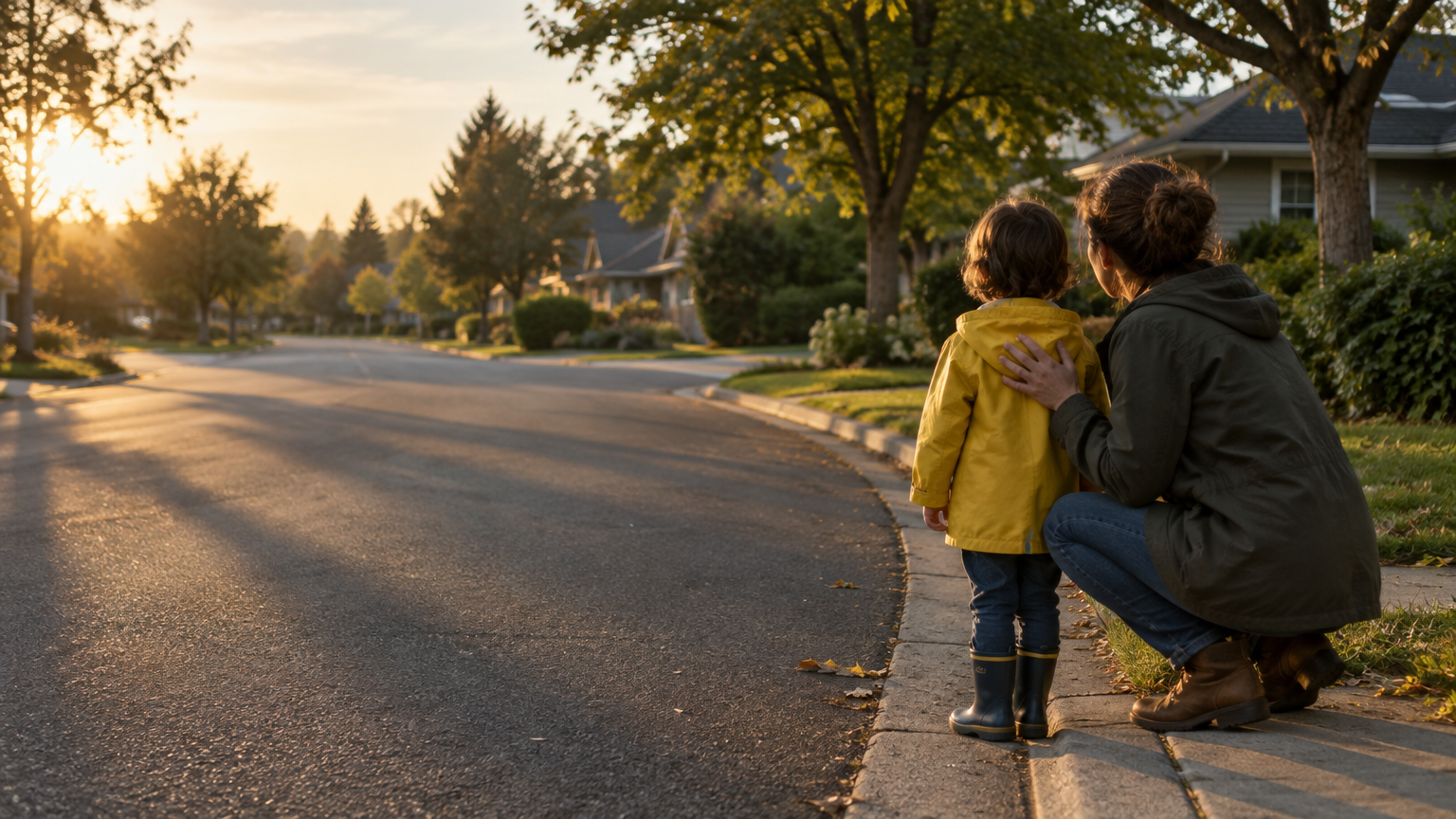
A child struck by a car at 30 mph faces a hospital stay, a funeral, or a family that never fully recovers. That’s the risk behind every walk to school, every trip to a friend’s house, and every dash across the parking lot to the ice cream truck.
And most of what parents teach kids about crossing the street lands too early, stays too vague, or rests on assumptions that fall apart the moment you look at how children actually think.
Pedestrian skills are teachable. But the standard advice – look both ways, hold my hand, use the crosswalk – skips over what matters most at each age. Here’s where parents go wrong, and what to do instead.
Myth: If a Child Knows the Rules, They Can Cross Safely
Knowing the rules and applying them in live traffic are two different skills. A five-year-old can recite “stop, look, listen” perfectly and still step off the curb in front of a moving car, because the cognitive machinery for judging how fast a vehicle is approaching and how much time is left to cross hasn’t finished developing.
Research on children as pedestrians points to roughly age 10 as the earliest most kids can consistently handle the mental task of crossing on their own, and even then only in familiar, moderate-traffic settings.
Rules still matter, but they’re the floor rather than the ceiling. A child who repeats the words back to you has learned a script, and a script is a long way from a skill.
Myth: Age 6 or 7 Is Old Enough to Walk Alone
Plenty of parents were walking to school by first grade, and the assumption gets passed down. But the American Academy of Pediatrics advises that most kids aren’t ready to cross the street alone until at least age 10.
Younger children have narrower peripheral vision, struggle to pinpoint where a sound is coming from, and tend to assume that if they can see a car, the driver can see them.
Rough age-by-age guide for what’s realistic:
- Ages 2–4. Hand-holding, every time, no exceptions. Kids this age bolt without warning and can’t judge traffic. Narrate what you’re doing out loud so they hear the thinking.
- Ages 5–7. Still with an adult, but let them lead the decision. Ask when it’s safe to cross and correct them in the moment. This is the age to build the habit of stopping at every curb.
- Ages 8–9. Practice crossing quiet residential streets with you a step behind. Introduce more complex intersections only with heavy coaching.
- Age 10 and up. Many children can start crossing familiar streets on their own, though busy multi-lane roads, turning traffic, and poor visibility still warrant an adult.
Myth: Crosswalks and Walk Signals Mean Safe
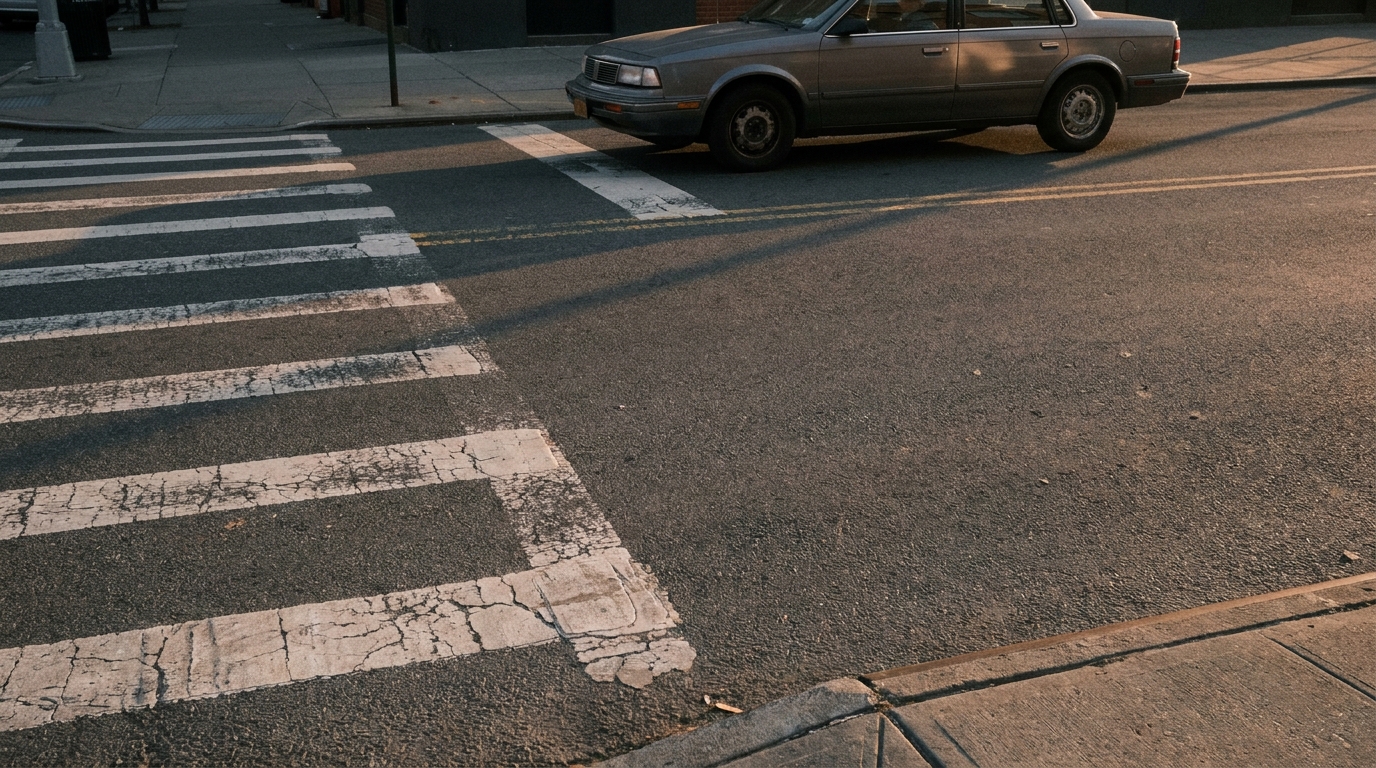
A painted crosswalk is a legal designation, not a force field. Drivers roll through them, turn across them while looking the other way, and miss them entirely when the sun is low.
Walk signals tell your child the light is in their favor, and say nothing about the driver making a right on red who is staring at oncoming cars instead of the curb.
Teach kids to make eye contact with drivers before stepping off the curb, and to keep scanning while they cross. Waiting for the walk signal is step one. Confirming that traffic has stopped is step two, and it’s the one that saves them.
Myth: The Street Is Where Most Close Calls Happen
Driveways, parking lots, and the area right behind the family car account for a large share of the scariest incidents involving small children.
A parent backing out of the garage cannot see a toddler crouched by the bumper. A neighbor pulling into their driveway isn’t scanning for a kid on a scooter.
Set a firm rule that the driveway is off-limits for play, and that kids stand on the porch or grass, never behind a car, when someone is loading up to leave.
For a sobering look at how location and demographics shape pedestrian risk, the patterns in the data are a useful reality check on how much depends on the environment kids are walking through, and not just their own behavior.
Myth: One Good Lesson Sticks
Pedestrian skills are built through repetition, not a single sit-down talk. The most useful thing a parent can do is narrate their own decisions on every walk.
Why you’re stopping here, what you’re listening for, why you’re waiting even though the light is green. Kids absorb the pattern of thinking, not the lecture.
Model it deliberately. Put the phone away at the curb. Walk to the corner instead of jaywalking mid-block, even when no one is coming. If they see you cut corners, they will too, and they won’t have the judgment yet to know when it’s a bad idea.


