
60 Minute to Win It Games for Kids: Epic Fun Challenges
Ever watched kids turn a simple stack of cups into the most thrilling competition of the century?
That’s the magic of Minute to Win It games. These quick, hilarious challenges changes everyday household items into entertainment gold, keeping children engaged without requiring fancy equipment or complicated setup.
Perfect for birthday parties, family game nights, rainy afternoons, or classroom celebrations, these games prove that sixty seconds can pack more excitement than an entire afternoon of screen time.
Each challenge tests different skills like balance, speed, precision, and creativity while guaranteeing giggles and friendly competition.
Whether hosting a dozen energetic kids or entertaining siblings at home, these games adapt to any group size and age range.
Awesome Minute to Win It Games That Kids Absolutely Love
These fast-paced challenges will transform any gathering into an unforgettable event filled with laughter and friendly competition.
Physical Challenge Games
These active games get kids moving and test their coordination, balance, and athletic abilities in hilarious ways.
1. Cookie Face
Players place a cookie on their foreheads and must move it to their mouths using only facial muscles; no hands allowed. The cookie journey involves wiggling eyebrows, scrunching noses, and making silly expressions.
This game creates hilarious photo opportunities as kids contort their faces trying to guide the treat downward.
Rules:
- Place one cookie on the forehead while tilting the head back
- Use only facial movements to slide the cookie down
- No touching with hands at any point
- A cookie must land in the mouth to count as a success
- The player has sixty seconds to complete the challenge
2. Stack Attack
Kids race to stack thirty-six plastic cups into a perfect pyramid and then collapse it back into a single stack. The challenge requires speed and steady hands, as a single wobble can send cups tumbling everywhere.
This game teaches spatial awareness while delivering adrenaline-pumping excitement as the clock ticks down.
Rules:
- Start with thirty-six cups in a single stack
- Build a pyramid with eight cups on the bottom row
- Each row decreases by one cup until reaching the top
- Collapsethe pyramid back into the original single stack
- Complete both stacking and collapsing within sixty seconds
3. Balloon Pop Relay
Participants must pop balloons by sitting on them without using their hands or sharp objects. Each player gets multiple balloons lined up and races to pop as many as possible before time expires.
The squeaky sounds and surprise pops keep everyone entertained and slightly jumpy throughout the challenge.
Rules:
- Place five to ten inflated balloons in the playing area
- Sit on each balloon to pop it
- No using hands, feet, or sharp objects
- Must fully pop each balloon for it to count
- Pop maximum balloons within sixty seconds
4. Dizzy Mummy
Players spin around a baseball bat ten times, then race to wrap a teammate in toilet paper from head to toe. The spinning creates dizziness, making the wrapping process comically difficult and unpredictable.
Partners must work together despite one being completely disoriented from spinning.
Rules:
- Spinner completes ten full rotations around the bat
- Immediately begin wrapping the partner with toilet paper
- Cover partner from shoulders to ankles
- The paper cannot tear during the wrapping process
- Complete mummy wrapping within sixty seconds after spinning
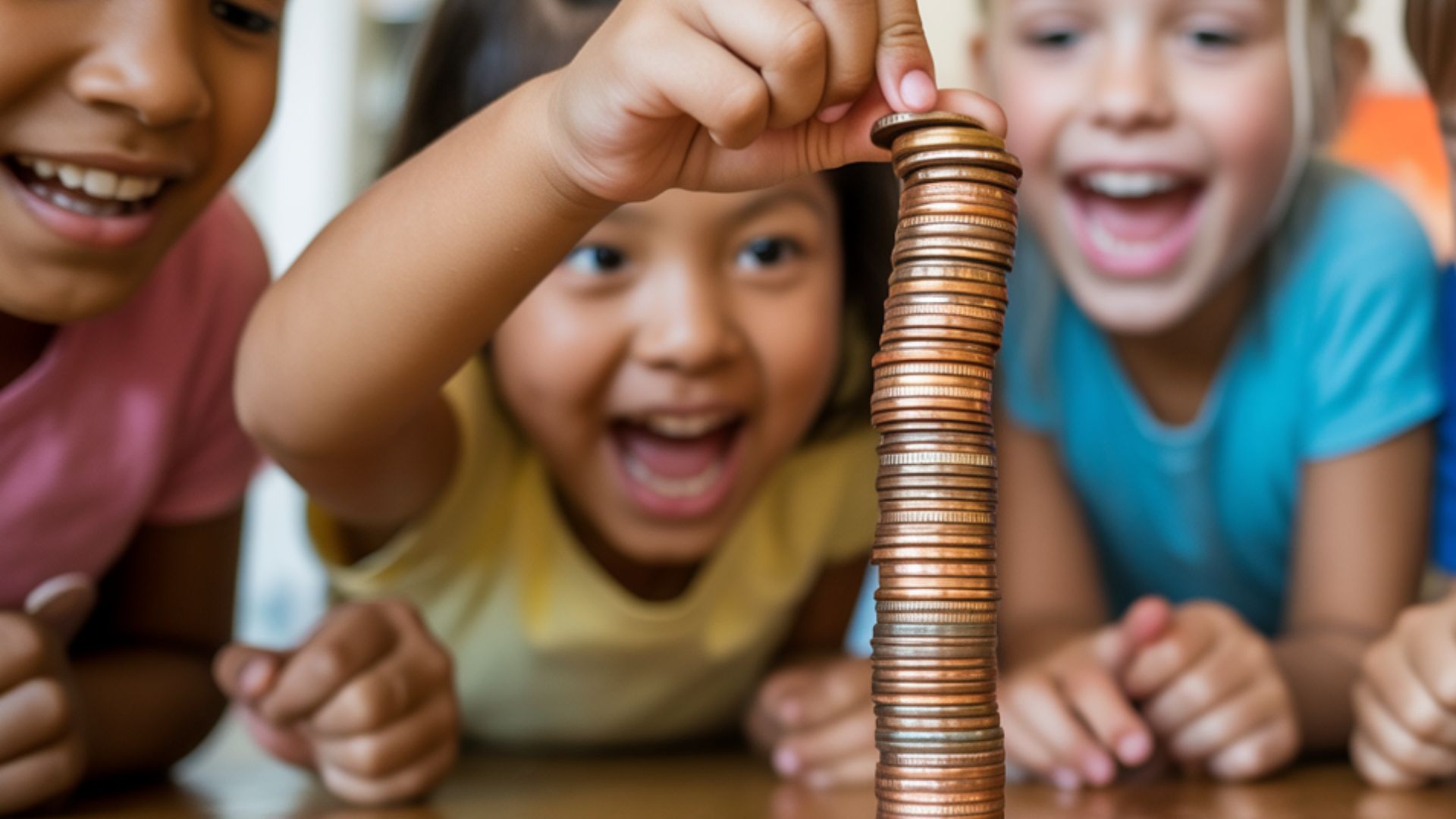
5. Penny Tower
Kids stack twenty-five pennies into one tall tower using only one hand. The weight and smooth surface of coins make this surprisingly challenging as towers topple unexpectedly.
This game demands patience, a gentle touch, and steady breathing to reach impressive heights without catastrophic collapse.
Rules:
- Use exactly twenty-five pennies
- Stack using only one hand throughout
- The other hand must stay behind the back
- The tower must stand unsupported for three seconds
- Complete a stable tower within sixty seconds
6. Chopstick Pickup
Players transfer small items, such as mini marshmallows or cereal pieces, from one bowl to another using only chopsticks. The slippery items and unfamiliar utensilscreate frustration aanddifficulty ffocusing
Kids develop fine motor skills as they race against the clock to move as many items as possible.
Rules:
- Place twenty small items in the starting bowl
- Use chopsticks to pick up and transfer items
- Move items to the second bowl across the table
- Items dropped on the table or floor don’t count
- Transfer maximum items within sixty seconds
7. Unicorn Ring Toss
A pool noodle attached to a headband becomes a unicorn horn for tossing rings onto. Players must keep the headband on while maneuvering their head to catch flying rings.
This game combines wacky appearance with genuine skill as kids judge trajectory and positioning.
Rules:
- Wear a headband with a pool noodle horn attached
- Partner tosses rings from the designated distance
- Catch rings on the horn using head movements only
- Hands cannot touch the horn or rings during the game
- Catch maximum rings within sixty seconds
8. Shoe Kick Off
Kids sit in chairs and kick off their shoes, trying to land them in a designated target zone. The footwear flies in unpredictable directions, creating chaos and laughter.
Socks must stay on while shoes launch across the playing area toward hula hoops or boxes.
Rules:
- Sit in a chair with both shoes loosely tied
- Kick shoes toward the target area five feet away
- Both shoes must land inside the target zone
- Player remains seated throughout the challenge
- Successfully land both shoes within sixty seconds
9. Cotton Ball Scoop
Blindfolded players use a spoon to scoop cotton balls from one bowl to another nearby. The weightless cotton balls feel invisible on the spoon, making this deceptively difficult.
Kids develop spatial memory and concentration while scooping what feels like air.
Rules:
- Wear a blindfold throughout the entire challenge
- Use a large spoon to transfer cotton balls
- Bowls placed shoulder-width apart
- Cotton balls falling outside the bowl don’t count
- Transfer a maximum of cotton balls within sixty seconds
10. Balloon Blow Race
Participants blow up balloons and release them to propel across a finish line without touching them. The erratic flight path of deflating balloons makes direction control nearly impossible.
Kids learn about air pressure while chasing zigzagging balloons across the floor.
Rules:
- Inflate the balloon completely, butdon’tt tie it
- Release the balloon to propel forward
- The balloon must cross the finish line ten feet away
- No touching the balloon after release
- Successfully cross the finish line within sixty seconds
11. Cup Flip Challenge
Players line up plastic cups at the table’s edge and flip each one to land upside down. Starting right-side up, each cup gets flipped with a quick wrist motion.
The satisfying clunk of successful flips builds momentum as kids race through the lineup.
Rules:
- Place six cups right-side up at the table edge
- Flip each cup to land upside down
- Use only one hand for flipping
- The cup must stay on the table after landing
- Flip all cups successfully within sixty seconds
12. Magazine Blow
Kids blow a magazine or a piece of cardboard across the floor without touching it with their hands. The lightweight material breathes well but requires sustained effort to cover distances.
Players often turn red-faced from continuous blowing while the magazine slowly inches forward.
Rules:
- Place the magazine on the starting line
- Blow to move it toward the finish line, ten feet away
- No touching with hands, feet, or other objects
- The magazine must completely cross the finish line
- Complete crossing within sixty seconds
13. Ping Pong Bounce
Players bounce ping-pong balls across a table, trying to land them in cups at the opposite end. The balls bounce unpredictably off the table surface,s creating suspense with each attempt.
Distance and angle dramatically affect the success rate, especially when keeping the challenge engaging throughout.
Rules:
- Stand at one end of a six-foot table
- Bounce ping pong balls toward cups
- Balls must bounce at least once before landing
- Land three balls in any cups
- Complete three successful landings within sixty seconds
14. Back Flip Pencil Catch
Kids toss pencils over their shoulders and catch them in bottles held behind their backs. The blind toss requires estimating the trajectory without visual feedback.
Successful catches produce satisfying clinks while misses send pencils scattering across the floor.
Rules:
- Hold an empty water bottle behind your back
- Toss the pencil over the shoulder toward the bottle
- No looking behind during tosses or catches
- The pencil must land inside the bottle and stay
- Successfully catch one pencil within sixty seconds
15. Defying Gravity
Players keep three balloons airborne simultaneously using only breath and body movements. Balloons drift lazily downward, requiring constant attention and repositioning.
Kids develop multitasking abilities while performing an exhausting routine to maintain altitude.
Rules:
- Release three balloons intothe air simultaneously
- Keep all balloons off the ground
- Use hands, breath, or gentle hits
- All three must stay airborne continuously
- Maintain flight for a full sixty seconds
16. Spoon Frog Jump
Small items placed on the spoon handles get launched toward targets by pressing the bowl end. Kids set up makeshift catapults to test physics principles through play.
Adjusting pressure and angle becomes intuitive as players refine their launching technique.
Rules:
- Placea small object on the spoon handle end
- Press the bowl end to launch the object
- Aim for a bucket or a target three feet away
- Successfully land three objects in the target
- Complete three landings within sixty seconds
17. Marshmallow Toss
Players toss mini marshmallows into the air and catch them in their mouths as they take steps backward. Each successful catch means moving farther away, increasing the difficulty.
The soft marshmallow won’t hurt anyone, but coordination deteriorates with distance.
Rules:
- Start three feet fromthe partner
- Partner tosses mini marshmallows gently upward
- Catch marshmallows in the mouth only
- Take one step back after each successful catch
- Catch five marshmallows within sixty seconds
18. Bottle Bowling
Empty water bottles serve as bowling pins while players roll balls to knock them down. The lightweight bottles fall easily, but setting them back up wastes precious seconds.
Kids strategize about speed versus accuracy for maximum pin destruction.
Rules:
- Set up ten empty bottles ina triangle formation
- Roll the ball from the designated line ten feet away
- Knocked bottles score points
- Reset bottles only after all attempts
- Knock down maximum bottles within sixty seconds
19. Moving On Up
Players start with a stack of cups and move the top cup to the bottom repeatedly until a marked cup reaches the top.
This seemingly simple task becomes frenetic as kids rush through repetitive motions. Muscle memory develops quickly, but mistakes happen under time pressure.
Rules:
- Stack ten plastic cups with one marked cup on top
- Movethe top cup to the bottom of the stack
- Continue until the marked cup returns to the top
- Dropped cups must be restacked before continuing
- Complete a full cycle within sixty seconds
20. Noodle Pick Up
Kids use an uncooked spaghetti noodle held in their mouths to pick up penne pasta pieces. The fragile noodle breaks easily with gentle movements. difficult
Threading pasta onto the noodle requires impressive dexterity and breath control.
Rules:
- Hold one piece of uncooked spaghetti inyour mouth
- Pick up penne pasta by threading it onto spaghetti
- Hands cannot assist with threading
- Transfer six penne pieces onto spaghetti
- Complete six pieces within sixty seconds
Precision and Skill Games
These challenges test hand-eye coordination, focus, and fine motor control through careful movements and strategic thinking.
21. Junk in the Trunk
Players wear a tissue box filled with ping-pong balls attached to their waists and shake to empty it. The ridiculous dancing required to dislodge balls guarantees entertainment for spectators.
Kids discover creative ways to move their bodies as they race to empty their boxes.
Rules:
- Attach a tissue box with eight ping pong balls to the waist
- Empty all balls through shaking and moving
- No using hands to remove balls
- All balls must exit the box
- Empty the box entirely within sixty seconds
22. Elephant March
A baseball inside a pantyhose leg creates a trunk that players wear on their heads. Kids swing the trunk to knock over water bottles lined up.
The unwieldy trunk requires head movements that look absolutely hilarious while testing coordination.
Rules:
- Wear pantyhose with a baseball on the head
- Swing the head to knock over bottles
- Knock down six bottles arranged in line
- Hands cannot touch the trunk or the bottles
- Knock all bottles within sixty seconds
23. Candy Stack
Players stack round candies vertically with only their mouths, while their hands remain behind their backs. The sticky candies prove difficult to manipulate with lips and teeth alone.
This challenge combines taste rewards with genuine difficulty, creating highly motivating gameplay.
Rules:
- Stack five round candies vertically
- Use onlyyour mouth to manipulate candies
- Hands must remain behind the back throughout
- The stack must stand unsupported for three seconds
- Complete a stable stack within sixty seconds
24. Paper Paddle
Players bounce a crumpled paper ball back and forth using clipboards as paddles. Keeping rallies going requires surprising concentration as the irregular ball flies unpredictably.
Partners develop rhythm together while volleying across a makeshift net.
Rules:
- Create a paper ball and grab two clipboards
- Bounce the ball back and forth between partners
- The ball must bounce on the table between hits
- Complete ten consecutive volleys without dropping
- Achieve ten volleys within sixty seconds
25. Tissue Pull
Players pull tissues from a box one at a time using only one hand. The tissues cling together, requiring delicate tugging to separate individual sheets.
This seemingly easy task becomes genuinely challenging when racing against the clock.
Rules:
- Use only one hand throughout
- Pull tissues individually fromthe full box
- Each tissue must be completely
- Place the removed tissues in a separate pile
- Remove twenty tissues within sixty seconds
26. Plate Stack
Players build a structure balancing six paper plates on top of a plastic cup. Each plate stacks atop the previous one, requiring increasingly steady hands.
Tower construction teaches patience as higher levels become increasingly unstable and more likely to collapse.
Rules:
- Start with one plastic cup as a base
- Stack six paper plates alternating with cups
- Plates and cups must alternate throughout
- Structure must stand unsupported for three seconds
- Complete stable structure within sixty seconds
27. Cup Cascade
Similar to Moving On Up, but with fifteen cups instead of ten, making completion harder. The increased stack height means more repetitions of the top-to-bottom movement pattern.
Fingers begin fumbling midway through, creating suspenseful near-completion moments where collapse threatens progress.
Rules:
- Stack fifteen cups withthe marked cup on top
- Move the top cup to the bottom repeatedly
- Continue until the marked cup returns to the top position
- Dropped cups require a complete restart
- Complete the cycle within sixty seconds
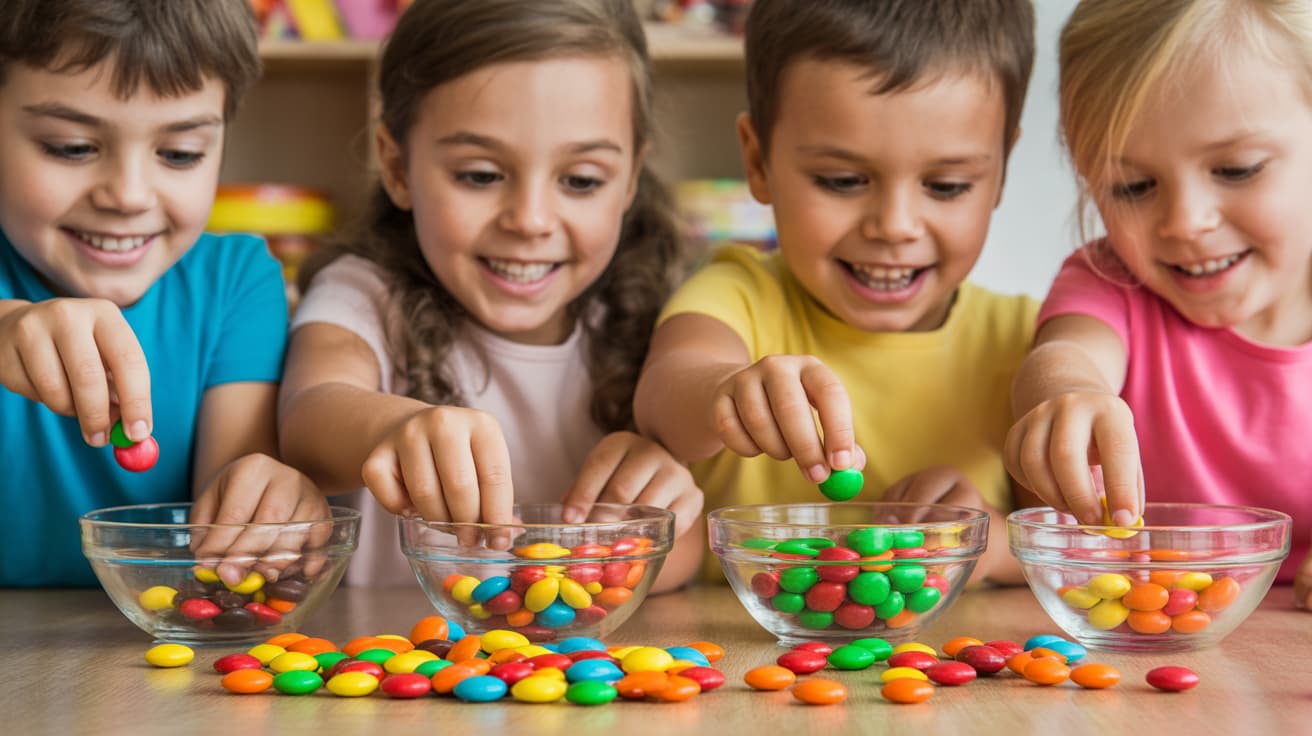
28. Color Sort
Players separate a pile of mixed colored candies into color-coordinated groups.
The similar sizes make it tricky to grab individual pieces, especially when rushing. Kids develop sorting and color recognitionskills ase their fingers work frantically.
Rules:
- Start with a mixed pile of colored candies
- Sort into separate piles by color
- Use only one hand for sorting
- All candies must be correctly sorted
- Complete sorting within sixty seconds
29. Penny Swing
Players fill one leg of pantyhose with pennies, then use it like a lasso to knock over objects.
Swinging the weighted hose requires surprising strength and accuracy. The unconventional tool creates memorable moments as kids perfect their lasso technique.
Rules:
- Filla pantyhose leg with fifteen pennies
- Swing to knock over bottles six feet away
- Knock down three bottles total
- Cannot walk closer to the bottles
- Knock all bottles within sixty seconds
30. String and Needle
Kids thread a string through six needles arranged in a line without glasses if they usually wear them.
The tiny eye-holes demand intense focus and steady hands. Players discover how much they rely on perfect vision during this precision challenge.
Rules:
- Remove glasses if usually worn
- Thread the ring through the six needle eyes
- Each needle is held by a helper or stuck in foam
- String must pass completely through each eye
- Thread all needles within sixty seconds
31. Card Slice
Players throw playing cards at a watermelon placed across the room to stick it.
The cards must penetrate the rind and stay embedded, demonstrating impressive force. Kids learn aerodynamicsas they try to become card-throwing champions.
Rules:
- Stand eight feet from the watermelon target
- Throw playing cards at watermelon
- Cards must stick to the rind and stay
- Successfully stick three cards
- Complete three sticks within sixty seconds
32. Box Puzzle
Players reassemble a cut-up cereal box like a jigsaw puzzle, racing to restore the original image.
The familiar box art provides a visual reference, but its irregular cut makes it difficult to use. This challenge sharpens problem-solving skills while keeping kids engaged in reconstructing packaging.
Rules:
- Cutthe cereal box into twelve irregular pieces
- Reassemble the box to its original form
- All pieces must connect properly
- The box must show correct image alignment
- Complete the puzzle within sixty seconds
33. Marble Roll
Kids roll marbles through a series of paper towel tubes held by teammates. The marble must travel through all tubes without falling out or stopping.
Communication and steady hands are key to success as teams coordinate their tube positions.
Rules:
- Set up five paper towel tubes in sequence
- Rollthe marble through all tubes without dropping
- Tubes held by different team members
- Marble must exit the final tube into the cup
- Complete the course within sixty seconds
34. Straw Tower
Players build the tallest possible tower using only drinking straws and tape. The lightweight materials wobble easily,, requiring engineering creativityto achiever stability.
Kids experiment with different structural designs while competingto reach the highest height.
Rules:
- Use twenty drinking straws and tape
- Build a freestanding tower
- The tower must stand unsupported for five seconds
- Measure height from base to top
- Complete the tallest tower within sixty seconds
35. Bean Balance
Players balance a spoon in their mouth and walk an obstacle course without dropping beans from the spoon.
The course includes turns and obstacles that test concentration and smooth movement. Kids develop careful walking techniques while keeping eyes focused on the precious cargo.
Rules:
- Place three beans on a spoon
- Hold the spoon handle in your mouth only
- Walk around the designated obstacle course
- Hands cannot touch the spoon or the beans
- Complete the course within sixty seconds
36. Sticky Note Catch
Partners throw sticky notes at each other, trying to make them stick to their clothing or bodies. The notes flutter unpredictably through the air, making catches challenging and entertaining.
Kids learn about aerodynamics as they try to maximize their sticky note collection.
Rules:
- Partners stand six feet apart
- Throw sticky notes toward your partner
- Notes must stick to clothing or the body
- Successfully stick ten notes on the partner
- Complete ten sticks within sixty seconds
37. Cereal Scramble
Players sort the mixed cereals back into their original containers by type. The similar shapes and sizes of different cereals make identification surprisingly difficult.
Kids sharpen their observation skills as they race to correctly categorize breakfast foods.
Rules:
- Mix three different cereals
- Sort back into three separate containers
- All pieces must go in the correct containers
- No mixing pieces between types
- Complete sorting within sixty seconds
38. Straw Transfer
Kids transfer water from one cup to another using only a drinking straw. Players suck water into the straw, cover the top with a finger, then release it into the second cup.
This demonstrates principles of air pressure while creating a surprisingly difficult timed challenge.
Rules:
- Start with one cup of water
- Use a straw to transfer water
- Cover the straw top with a finger to hold water
- Transfer maximum water to the empty cup
- Complete transfer within sixty seconds
39. Button Sort
Players sort mixed buttons into piles by size, color, or number of holes. The variety of button characteristics creates multiple sorting possibilities and strategies.
Kids develop categorization skills while fingers fly through the button collection.
Rules:
- Start with a pile of fifty mixed buttons
- Sort into designated categories
- All buttons must be correctly placed
- Categories are determined before starting
- Complete sorting within sixty seconds
40. Paper Airplane Distance
Kids fold and throw paper airplanes, trying to achieve maximum distance. The folding technique dramatically affects flight performance, creating learning opportunities.
Players experiment with different designs while competing for the longest flight.
Rules:
- Fold one sheet of paper into an airplane
- Throw from the designated line
- Measure the distance from the line to the landing spot
- Three throws allowed, best distance counts
- Complete three throws within sixty seconds
Mental and Creative Games
These challenges test memory, quick thinking, creativity, and problem-solving abilities in fun and engaging ways.
41. Memory Match
Players flip over cards to find matching pairs while racing against the clock. The arrangement changes with each game, requiring fresh memorization.
Kids sharpen their memory skillsas they compete to find the most pairs.
Rules:
- Arrange twenty cards face down
- Flip two cards at a time, looking for matches
- Keep matched pairs aside
- Unmatched cards flip back face down
- Findthe maximum pairs within sixty seconds
42. Word Builder
Kids create as many words as possible from the the letters in a long provided word. The word pool expands quickly as players discover new combinations.
This challenge enhances vocabulary and spelling while encouraging creative thinking.
Rules:
- Provide one long word as a source
- Create shorter words using those letters only
- Each letter is used only as many times as it appears
- Minimum three letters per word
- Create as many words as possible within sixty seconds
43. Quick Draw
Players sketch a designated object while teammates guess what it is, the rushed drawing results in hilarious interpretations and enthusiastic guessing.
Kids develop visual communication skills through this fast-paced artistic challenge.
Rules:
- Draw the provided word or phrase
- Teammates shout guesses
- No letters, numbers, or talking from the artist
- Successfully guess three drawings
- Complete three correct guesses within sixty seconds
44. Pattern Copy
Kids memorize and recreate a pattern of colored blocks shown briefly. The pattern disappears after viewing time, forcing players to rely on memory.
This test measures visual memory and spatial reasoning under time pressure.
Rules:
- Show the pattern of colored blocks for ten seconds
- Hide pattern from view
- Recreate the pattern exactly with the provided blocks
- All colors and positions must match
- Complete recreation within sixty seconds
45. Story Chain
Players add one sentence to a story, going around the circle as quickly as possible. The tale grows increasingly absurd and entertaining with each contribution.
Kids develop creative storytelling and quick thinking through collaborative narrative building.
Rules:
- The first player starts the story with one sentence
- Each player adds exactly one sentence
- The story must make basic sense
- Complete two full rounds around the circle
- Finish two rounds within sixty seconds
46. Number Sequence
Kids identify and continue number patterns as quickly as possible. The sequences vary in difficulty, testing mathematical reasoning.
Players develop pattern-recognition skills as they race to solve multiple sequences.
Rules:
- Provide five different number sequences
- Identifythe pattern and the next three numbers
- Write answers clearly
- Correctly solve three sequences minimum
- Complete solving within sixty seconds
47. Rhyme Time
Players list as many rhyming words as possible for a given word. The list grows as kids dig deep into vocabulary, searching for matches.
This enhances language skills and phonetic awareness through timed brainstorming.
Rules:
- Provide one starting word
- List words that rhyme with it
- Real words only, no nonsense
- No repeating words
- Generate fifteen rhymes within sixty seconds
48. Category Speed
Kids name items from a specific category as rapidly as possible. The category could be animals, foods, cities, or countless other options.
Players develop quick recall and categorization abilities through this verbal challenge.
Rules:
- Announce one category
- Player lists items from that category
- No repeating items
- Items must genuinely fit the category
- Name twenty items within sixty seconds
49. Alphabet Race
Players name objects in alphabetical order, starting with each letter. The Z words always prove most challenging, creating suspenseful finishes.
Kids strengthen alphabet knowledge and vocabulary through this sequential challenge.
Rules:
- Name one object for each letter
- Must go in alphabetical order
- Cannot skip letters
- Objects must be real things
- Complete the entire alphabet within sixty seconds
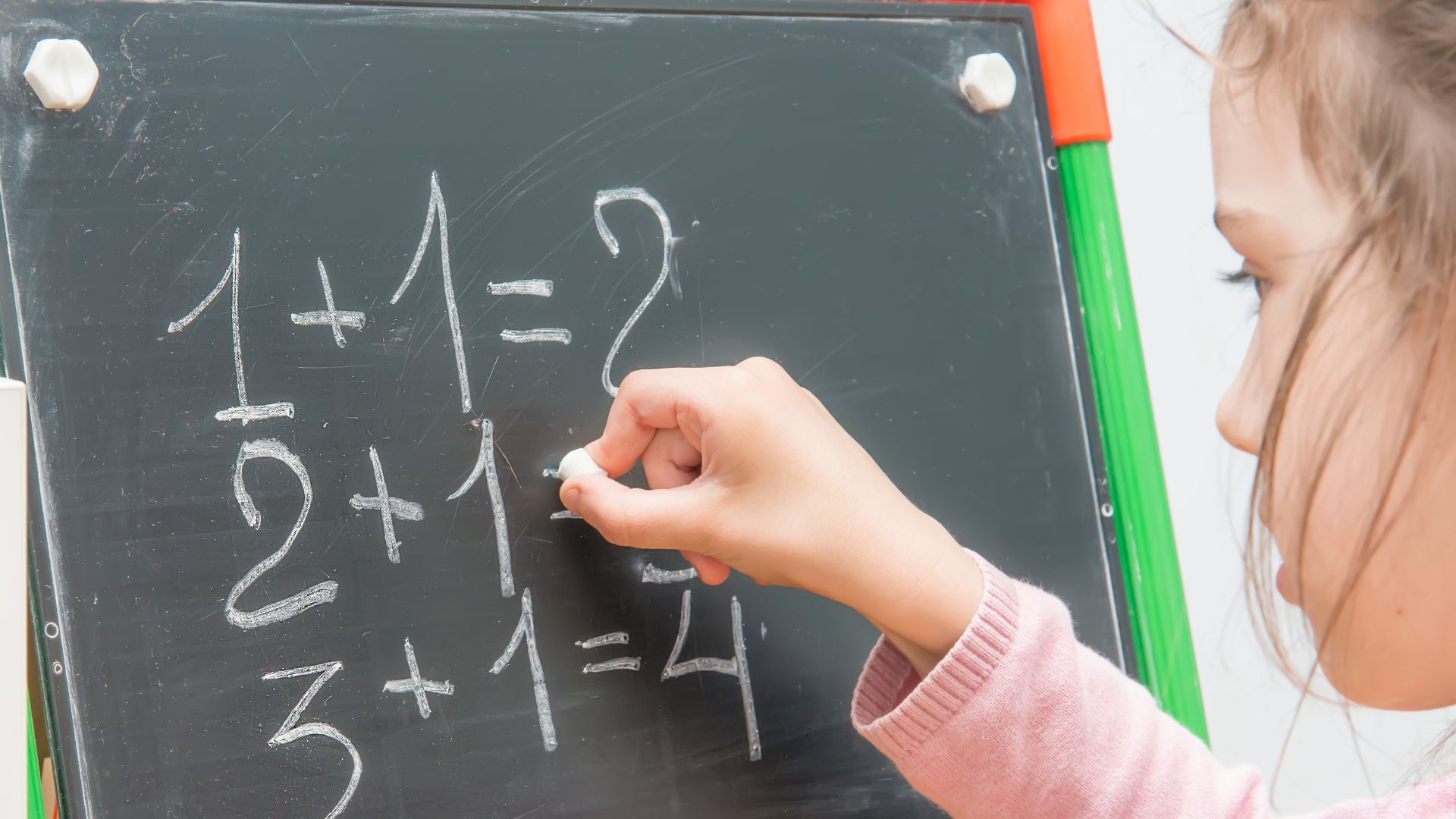
50. Math Sprint
Kids solve as many simple math problems as possible from a prepared list. The problems vary in difficulty, testing different mathematical skills. Players develop mental math skills as they race through calculations.
Rules:
- Provide a list of math problems
- Solve problems in order
- Write answers clearly
- Skip problems if stuck
- Complete fifteen problems within sixty seconds
51. Color Memory
Players memorize the arrangement of colored objects and then recreate it from memory. The arrangement disappears requiring visual memory recall.
Kids strengthen memory skills through this colorful spatial challenge.
Rules:
- Show the arrangement of ten colored items
- Study for fifteen seconds
- Hide the arrangement from view
- Recreate the arrangement exactly
- Complete recreation within sixty seconds
52. Sound Match
Kids listen to sounds and identify what creates them from a list of options. The sounds could be animals, instruments, or everyday objects.
Players develop auditory discrimination skills through careful listening.
Rules:
- Play ten different sounds
- Match sounds to the provided list
- Write or say matches
- Sounds played only once each
- Match all sounds within sixty seconds
53. Word Search Speed
Players find and circle as many words as possible in a word search puzzle. The words hide in various directions, challenging visual scanning.
Kids develop pattern recognition and focus through this classic puzzle format.
Rules:
- Provide a word search with target words
- Circle found words clearly
- Words may go in any direction
- Find a minimum of eight words
- Complete the finding within sixty seconds
54. Emoji Story
Kids create a story using only emoji symbols that others must interpret. The limited visual vocabulary requires creative communication strategies.
Players develop symbolic thinking and interpretation skills through this modern challenge.
Rules:
- Create a story using fifteen emojis
- Others interpret the story’s meaning
- No words allowed in the emoji sequence
- A story must have a beginning, a middle, and an end
- Create and interpret within sixty seconds
55. Sentence Scramble
Players unscramble mixed-up words to form coherent sentences. The scrambled letters require careful analysis and knowledge of language.
Kids strengthen their spelling and understanding of sentence structure through reconstruction.
Rules:
- Provide three scrambled sentences
- Unscramble all words in each
- Write sentences correctly
- Sentences must make sense
- Complete all sentences within sixty seconds
56. Object Count
Kids quickly count specific items in a cluttered picture or pile. The visual chaos makes accurate counting surprisingly difficult.
Players develop focus and counting accuracy under time constraints.
Rules:
- Present a cluttered image or pile
- Count a specific type of object
- Announce final count
- Recount if uncertain
- Complete an accurate count within sixty seconds
57. Speed Spell
Players spell challenging words called out by a partner or leader. The words increase in difficulty, testing spelling knowledge.
Kids strengthen spelling skills through rapid-fire word challenges.
Rules:
- The leader calls out spelling words
- Player spells words aloud
- Correctly spell ten words
- Move to the next word if stuck
- Complete ten words within sixty seconds
58. Pattern Prediction
Kids identify patterns and predict what comes next in a sequence. The patterns could involve shapes, colors, numbers, or objects.
Players develop logical reasoning through pattern analysis.
Rules:
- Show five different patterns
- Predict the following three items in each
- Write or arrange predictions
- Correctly predict three patterns minimum
- Complete predictions within sixty seconds
59. Memory Tray
Players study a tray of objects, then recall as many as possible after it’s covered. The variety of objects challenges comprehensive memory.
Kids develop observation and memory skills through this classic game format.
Rules:
- Display tray with fifteen objects
- Study for twenty seconds
- Cover the tray completely
- List all remembered objects
- Recall the maximum number of objects within sixty seconds
60. Word Association
Kids respond rapidly with associated words when prompted. The associations must make logical sense to count.
Players develop quick thinking and vocabulary connections through rapid responses.
Rules:
- The leader provides prompt words
- Player responds with the associated word
- Association must make sense
- No repeating responses
- Complete twenty associations within sixty seconds
Wrapping Up
These games prove that incredible entertainment requires nothing more than household items, creative thinking, and sixty seconds on the clock.
Each challenge offers unique excitement, whether testing physical skills, mental sharpness, or creative problem-solving.
Kids find out new talents while families create lasting memories filled with laughter and friendly competition.
The beauty lies in simplicity and adaptability, allowing games to fit any occasion, space, or group dynamic.
So gather those cups, balloons, and cookies, set that timer, and watch ordinary moments transform into extraordinary adventures.
Ready to start the countdown and see who becomes the ultimate Minute to Win It champion?
Let the games begin and create unforgettable experiences today.


